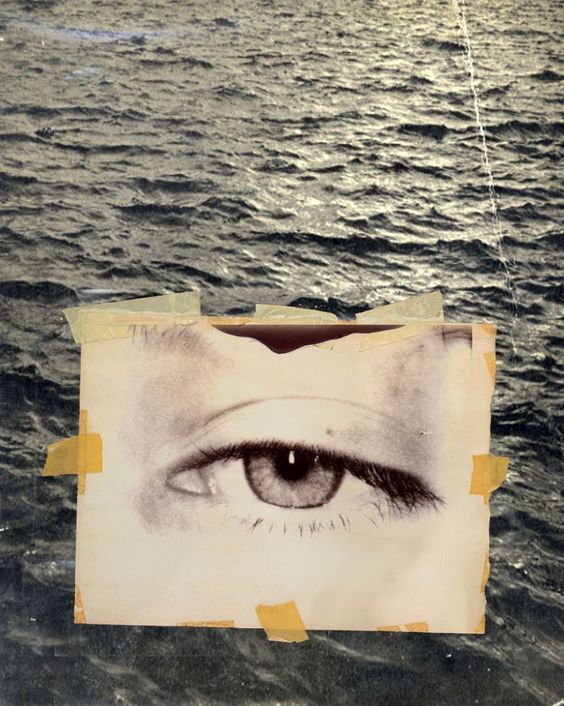
 Neptune has a number of ways of taking the edge off life. It is part of its magic and part of its danger. We cannot stare directly at every painful reality twenty-four hours a day without eventually becoming unbearable company, including to themselves. We dream, fantasize, idealize, distract ourselves, fall asleep, fall in love, watch films, listen to music, drink, pray, scroll, daydream, romanticize the past and then convince ourselves that an obviously questionable person is just “complicated.” A little Neptune makes reality livable. Too much Neptune slowly removes the reality. This distinction lies at the heart of many Neptunian coping mechanisms. At first the person only wants relief. They want the sharp corner rounded off. They want one evening where grief no longer hurts quite so much, one relationship where loneliness feels suspended, one explanation to make disappointment easier to tolerate. There is nothing inherently sinister in this. The psyche needs rest from itself occasionally. Even reality, frankly, could benefit from being placed on mute now and then. Yet Neptune itself cannot announce the moment relief turns into avoidance. The edge is softened, then softened again, and eventually the person has forgotten there ever was an edge.
Neptune transits traditionally make astrologers nervous around questions of deception, confusion and misplaced trust. The frightening part isn’t simply that another person might lie. Ordinary lies are reassuringly straightforward. Someone knows the truth, tells you its opposite, and hopes you don’t discover the receipt in their coat pocket. Neptunian deception can slide into the more surreal. The person telling the story might partly believe it. They can sincerely describe a relationship in a way so it protects them from recognizing what is happening. They insist everything is fine while quietly rearranging every fact suggesting otherwise. They explain away another person’s behavior so repeatedly, the explanation sounds less like interpretation and more like established history. It is what we might even call innocent deception.
It sounds contradictory. How could deception ever be innocent? Yet psychologically it makes considerable sense. A person can tell the version of reality allowing them to remain emotionally intact. They edit without consciously knowing they are editing. They omit what doesn’t fit. They emphasize what does. They remember selectively. They interpret generously. The story suits the teller so perfectly, eventually it no longer feels like a story. It feels like reality. There is real psychological territory underneath this Neptunian symbolism. Research into the “illusory truth effect” has repeatedly found – repetition increases the perceived truthfulness of information. Familiarity itself begins to lend a statement credibility, even when the statement is false or questionable. Human beings therefore possess a slightly alarming weakness: what feels familiar often also feels true. Neptune would probably send this finding a thank-you card.
Repeat “He loves me, he is just afraid of commitment” often enough and the sentence develops a backbone. Repeat “My childhood was perfectly happy” often enough and painful memories are just interruptions of the real story. Repeat “I don’t care” for ten years and eventually even the person saying it forgets how much caring was required to construct such an elaborate declaration of indifference. The lie doesn’t always feel like a lie. It is the important part.
Conscious deception usually contains some conflict. Somewhere inside, the person knows there is a gap between reality and what they are saying. Innocent or unconscious deception works differently. The protective version of reality has already absorbed the unwanted facts. The psyche has quietly rewritten them. Often Neptune is frightening during periods of uncertainty. Pluto fears what reality will destroy. Saturn fears what reality will demand. Neptune fears whether reality is even where we think it is. Under strong Neptune symbolism, certainty itself grows slippery. You wonder whether the person you love is who you think they are. You wonder whether your interpretation of the relationship has ever been accurate. You wonder whether their promises were sincere, whether your own hopes filled in half the missing information, whether you were deceived or whether both of you participated in a shared fantasy. Uncertainty cuts deeply.
A direct betrayal hurts (usually under Pluto transits), yet at least the mind receives a fact to wrestle with. Neptunian disillusionment leaves the person questioning the entire map. “What actually happened?” “When did I know?” “Did they deceive me?” “Did I deceive myself?” “Was any of it real?” Those questions contain the horror of Neptune. It threatens trust in perception. And it is destabilizing. Yet Neptune shouldn’t be reduced to gullibility. Highly Neptunian people aren’t simply foolish souls wandering around enthusiastically purchasing bridges. Often they possess heightened emotional sensitivity. They understand ambiguity, atmosphere, symbolism, longing and all the half-spoken territories of human experience. The problem occurs when sensitivity is without sufficient discrimination.
Idealization also belongs strongly to Neptune. Idealization rarely starts as stupidity. Usually the person sees a genuine quality and then quietly enlarges it. Someone is kind, therefore they must be emotionally safe. Someone is wounded, therefore they must possess great depth. Someone feels familiar, therefore the connection must hold profound meaning. Someone says exactly what we long to hear, therefore surely they understand us uniquely. A fragment becomes a portrait. Then we fall in love with the portrait. Eventually reality walks into the gallery. Then the famous Neptunian disillusionment comes. We rarely deceive ourselves randomly. We deceive ourselves toward what we need. We distort toward hope when truth feels unbearable. We distort toward despair when hope feels dangerous. We distort toward innocence when guilt feels intolerable. We distort toward victimhood when responsibility feels humiliating. We distort toward romance when loneliness feels too stark.
The illusion usually serves an emotional purpose.
So when handling Neptunian issues, simply telling someone to “face reality” often accomplishes very little. Reality was avoided for a reason. Remove the illusion too brutally and you remove the psychological shelter before the person has built anywhere else to live. Neptune’s healthier expression is compassionate clarity. The ability to dream without requiring the dream to masquerade as evidence. The capacity to hope without editing contradictory facts. To be able to love without turning another person into a projection screen. To escape occasionally without moving permanently into the escape route. And perhaps most importantly, it asks us to notice the stories we repeat. Not only the lies told by others. Our own favorite sentences. The explanations we have smoothened through years of handling them.
Some people, though, seem almost constitutionally unable to live comfortably with a lie. They might try. They might conceal, evade, minimize, or tell themselves the silence is technically not dishonesty, which is one of humanity’s favorite little legal loopholes. Yet the concealed honesty about the situation follows them around. It sits beside them at breakfast. It interrupts sleep. It appears in conversation even when nobody has mentioned the subject. Eventually they confess less from moral heroism than from sheer psychological exhaustion. Other people seem able to deceive with far less inner disturbance. The difference is psychologically fascinating.
It would be too simple to conclude this; the first person possesses a conscience and the second does not. Guilt depends upon temperament, empathy, identification with personal values, fear of consequences, the ability to compartmentalize, and the story a person tells themselves about what they have done. Two people might commit the same deception while experiencing entirely different internal realities.
One thinks, “I lied.” The other thinks, “I protected them.” Another thinks, “They would never understand.” Another thinks, “It was none of their business.” Another barely experiences the contradiction at all, since their preferred interpretation has already swallowed the awkward fact.
Neptune is so interesting astrologically. It alters the emotional atmosphere around the situation until the distinction of the truth itself grows difficult to hold. The psyche is also creatively inventive when reality threatens the image it needs to preserve. Two charts might tell us less about who lies and more about how each person experiences the inner conflict surrounding it. One person might possess such a strong internal demand for coherence, deception produces unbearable conflict. They need the outer story and inner reality to match. Until they do, the psyche feels divided. Another person handles contradiction through compartmentalization. One part knows. Another part continues daily life. The two parts rarely meet up.
A more Neptunian personality may resolve this inner conflict through reinterpretation. The fact remains somewhere underneath, yet meaning shifts around it. Memory softens. Motives are rewritten. Responsibility blurs. The uncomfortable detail loses its accuracy. Eventually the person relates the emotionally survivable version of the idea. Liars aren’t always cruel. It can actually reflect the opposite: an enormous difficulty tolerating guilt, conflict, disappointment, or the pain of seeing oneself clearly. There are people whose self-image is flexible enough to say, “I behaved badly.” Oddly, this flexibility often makes honesty easier. They survive the admission. Then there are people for whom recognizing wrongdoing threatens the entire internal realm. If “I did a selfish thing” immediately turns into “I am a terrible person,” the psyche has far more incentive to edit the story. Denial then functions like emergency scaffolding around identity.
Neptune plays the heart like a harp, finding whatever emotional string produces longing, pity, hope, nostalgia, rescue, sacrifice, or forgiveness. You will never find Neptune arguing its case like Saturn. It seduces through feeling. And we should never underestimate the emotional appeal of an illusion. People often speak as though facing reality is obviously preferable to escaping it. Intellectually, perhaps. Emotionally, reality is terrible advertising. Reality says the relationship is over. Neptune remembers the beautiful beginning. Reality says this person repeatedly disappoints you. Neptune remembers the wounded child hidden inside them. Reality says you are lonely. Neptune offers fantasy. Reality says time is passing. Neptune removes the clock. Who does not understand the appeal? Human beings need Neptune.
Without some capacity for escape, imagination, sleep, fantasy, art, music, romance, spirituality and dreams, existence would be unbearably literal. We would wake every morning fully conscious of mortality, taxation, ageing, unanswered emails and the fact that the kitchen needs cleaning. Neptune gives the psyche a place where the edges soften. For a while, the solid world loosens its grip. Time disappears inside music. The boundaries of the self fade inside love. Grief loosens during sleep. A film takes us into another life. Prayer takes the cramped little ego and places it against something immeasurably larger. Art allows suffering to stop being just suffering and turn into meaning, beauty, image, sound. The world of Saturn is heavy with clocks, consequences, definitions, duties and limits. The world of Mercury names everything. Mars separates desire from obstruction. The Sun insists upon being someone in particular. Neptune whispers that perhaps, for an hour, we do not have to be anyone at all. No reputation. No age. No history. No judgment. No tedious inventory of failures. No harsh line between what belongs to me and what belongs to you. There is enormous mercy in this dissolution. There is also danger. Once escape becomes easier than return, Neptune then takes more than it gives. At first the person needs a little distance from reality. Later they need distance from every reality that produces discomfort. Fantasy turns from sanctuary into residence. Alcohol moves from pleasure into anesthetic. Romance moves from connection into rescue. Spirituality moves from transcendence into avoidance. Compassion turns into endless excuses. Hope refuses to look at evidence.
The person hasn’t merely taken the edge off. The edge has disappeared. And edges matter. Edges tell us where one person ends and another begins. They tell us this – compassion for another person shouldn’t require abandoning ourselves. Neptune dislikes such harsh little borders. Yet without them we lose our footing. The healthiest Neptune gives us a temporary loosening of reality without requiring us to falsify reality. We disappear into music and return. We dream and wake. We love while still seeing the person in front of us. We forgive without rewriting what happened. We possess imagination without demanding our imagination serve as evidence. All of this also changes how we think about deception. The most important question isn’t just, “Does this person lie?” It is, “What happens inside them when honesty becomes emotionally difficult?”
Do they feel guilt? Do they confess? Do they rationalize? Do they fragment the experience into separate compartments? Do they reinterpret events until their preferred story feels sincere? Do they disappear into fantasy? Do they convince themselves first, then everyone else?
Such differences reveal far more about the shape of a personality than the simple category of honest or dishonest ever could. And it is the moral ambiguity of Neptune. People all don’t lie out of wickedness. They flee it out of compassion toward themselves. Out of fear. Out of shame. Out of love. The illusion is the little boat that carried them across an emotional sea they did not yet know how to swim. The trouble begins when they reach the shore and refuse to get out.
Neptune also has a much deeper sorrow: the feeling of having been separated from a light we cannot properly remember. The “light” needn’t mean heaven in a religious sense, nor Eden in a literal one. It points toward a state of unity, innocence, belonging, peace, love without rupture, existence without the constant friction of being a separate self. Neptune remembers, symbolically at least, a condition in which there were no hard borders between us and life. Then we arrive here. Into clocks. Bodies. Bills. Disappointments. Separate bedrooms. Separate minds. Separate needs. Separate griefs. Reality is terribly fond of edges.
Where Neptune sits strongly in the chart, there is a deep longing for reunion with whatever feels lost. The person doesn’t consciously think, “I am seeking divine unity,” or, “I wish to return to Eden.” The longing appears in far more ordinary forms. Why am I never quite satisfied? Why do I miss places I have never lived? Why does ordinary life occasionally feel unbearably flat? Why do I feel homesick when I am already home? Why does love always seem to promise more than two ordinary people are actually capable of giving one another? Why does reality feel as if it has forgotten an important ingredient? It is Neptune. There is often a sense of being locked outside a door without remembering what exists on the other side. And naturally, this makes refuge extraordinarily tempting. If reality feels too hard, then Neptune searches for ways to soften the separation.
Love. Music. Spirituality. Fantasy. Sleep. Alcohol. A beautiful story. A person.
For a few minutes or hours, the edges blur. The self loosens. Time disappears. We stop feeling trapped inside our own little psychological apartment. And there, briefly, is the light. Or at least a reflection of it. Neptune is intoxicating. It offers more than earthy pleasure. It offers reunion. The trouble enters when the person confuses the doorway with the destination. A lover seems to carry paradise. A drug could be the gateway to peace. A fantasy could carry salvation. An unavailable person may hold the missing piece of the soul. Then longing attaches itself to form. And form, being form, eventually disappoints. The lover turns out to have irritating habits. The dream job still contains Mondays. The beautiful relationship contains boredom, resentment, laundry and misunderstood communication. Reality wanders back. Neptune hates this part. So pretending and lying start to enter the picture. Often protective lying.
If reality threatens Eden, the psyche will quietly adjust reality. Perhaps the relationship is deeper than it appears. Maybe the person really does understand us. The betrayal didn’t mean what it obviously meant. The warning signs are only fear. One more chance will restore the original magic. If we believe hard enough, the door will reopen. The lie serves longing. It distorts reality to preserve paradise. The person is protecting an image of wholeness. If they surrender the fantasy, they lose a person, dream, belief, or future, but they also lose Eden again. Hence the reason why Neptunian disillusionment is so enormous. Other people look at the situation and think, “It was only a relationship.” For the Neptunian person, it was never only a relationship. It was the place where reunion seemed possible. It was the place where loneliness stopped. It was the place where the world briefly made sense. It was the place where the lost light appeared to shine through another human being. Then the relationship ends, or reality exposes the illusion, and the person grieves the world they thought they were returning to.
When it comes to Neptune, the homesickness never completely disappears. Maybe it is just part of Neptune’s nature. There remains a faint longing for a place without separation, without ugliness, without endings. But eventually the person no longer demands heaven be reproduced by reality. The longing remains. Yet instead of lying to preserve Eden, the person learns to recognize small pieces of it where they actually exist. In music. In love. In beauty. In sleep. In compassion. In those rare moments where the self loosens its grip and the world feels less divided. Just enough light to remember why we keep going.
Neptune resembles a sort of psychological suicide. It speaks to the impulse to dissolve the hurt part of the self, the self with boundaries, responsibilities, disappointments, history, shame, and a name attached to all of it. There are moments when the Neptunian person wants relief from being the person who has to live all of this. This is now a very different kind of longing. Neptune rules yearning in its most difficult form: the wish for an experience, person, dream, state of consciousness, artistic vision, spiritual feeling, or imagined future seemingly capable of transporting us out of ordinary existence. The attraction is emotional, aesthetic, spiritual, psychological. We are seduced by what an experience promises to make us feel. The Neptunian person is often less interested in possessing the object of desire than in entering the state of consciousness attached to it. They want the music to carry them away. They need the relationship to make the world disappear. They hope the dream will rescue them from the dullness of reality. They want to feel transported. And transport is one of Neptune’s favorite drugs.
Longing itself usually matters more than fulfilment. The fantasy holds an emotional atmosphere: beauty, reunion, transcendence, innocence, salvation, belonging. Once the desired thing enters ordinary reality, it acquires edges. It disappoints. It requires maintenance. It starts having opinions. Fantasy is much easier to love. So maybe this is why Neptune keeps the dream slightly out of reach. The distance protects the longing. The longing itself is functioning like an emotional narcotic. The person begins feeding it. They revisit the unavailable lover. They replay the impossible future. They keep returning to the fantasy that hurts them. They idealize what cannot fully martialize. From the outside, it looks self-defeating. From the inside, the pain itself still contains the dream.
Many destructive Neptunian patterns are difficult to understand through logic alone. The person can look like they are just choosing pain. But they are choosing the feeling hidden inside the pain. Remove the destructive pattern and one must face the emptiness underneath. It is the terrifying part. A person can know perfectly well when a situation is hurting them and still feel drawn back toward it. Reason says, “This is ruining you.” Neptune whispers, “Yes, but remember how beautiful it felt.” And Neptune whispers very well. You won’t hear it shouting loudly. It plays the harp. Neptune seduces through atmosphere, promise, possibility, and through the feeling our ordinary reality might briefly open into another world. A person becomes seduced by an identity. By a dream. By a savior. By being needed. By suffering beautifully. By the fantasy of rescuing another person. By the image of being rescued themselves. By a future that never quite manifests.
Neptune’s destructive side works slowly. It takes away one boundary at a time. One fact. One uncomfortable reality. One responsibility. One small piece of self-respect. Nothing looks catastrophic at first. The person is simply coping. Then coping turns into avoidance. Avoidance turns into dependence. Dependence turns into a life organized around not having to feel what waits underneath. And eventually the refuge consumes the person who sought refuge inside it. The thing saving us from pain might also prevent us from developing the strength to live through pain. Neptune asks a difficult question. What are you really longing for?
What feeling do you believe waits there? Peace? Belonging? Innocence? Release from responsibility? Release from yourself? The outer object is only carrying the projection. And once the person recognizes the emotional state underneath the longing, the spell weakens slightly. They no longer have to destroy their footing to reach it, or seek the light without deciding darkness has made ordinary life unworthy of being lived. This is where Neptune has ceased to consume the person. And begins to illuminate them.