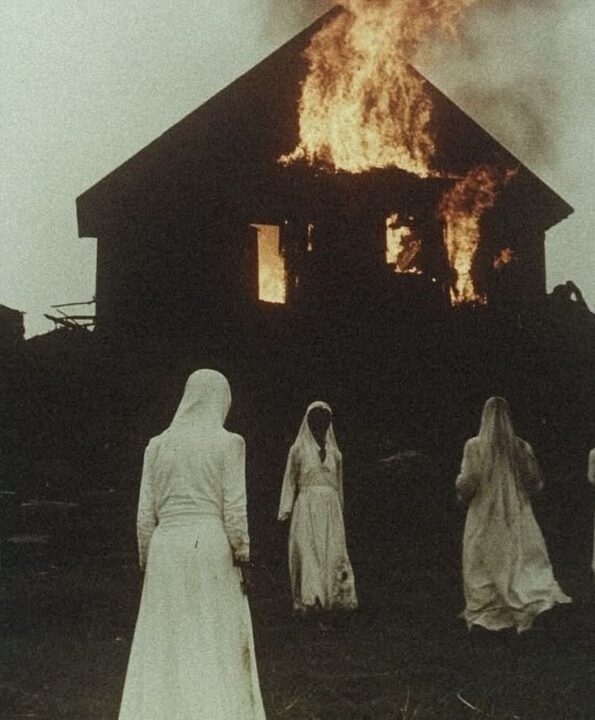
 In the chart, fire refuses to remain merely potential. It says, before language, before planning, before anyone has had the chance to make things complicated, “I am here.” Fire is the animating force, the inner spark pushing life out of hiding. It does not wait until conditions are ideal, because conditions are never ideal and fire knows this with the ancient impatience of something born to move. It is the will-to-be, the deep instinct to exist as oneself, not as an accessory to someone else’s story. The 1st house is the first eruption of this fire into life. It is the moment being begins to individuate, the moment the soul leans forward and says, “This is me coming through.” There is something raw and almost innocent about it. Before we know who we are, before we have possessions, relationships, duties, beliefs, wounds with names, or a carefully curated personality, there is this first movement of presence. The 1st house is the doorway through which life enters as a particular person. It is being as an act.
Because the 1st house is angular, its energy is active, immediate, and forceful. Angular houses initiate. They release energy into life. When this angular force combines with fire, the result is the most direct expression of vitality: the activity of becoming visible as a separate self. The body is the first announcement we make before the personality has even properly formed. It is about how life moves through us spontaneously. The way we enter rooms, respond to challenge, assert ourselves, begin things, defend our right to exist, and instinctively meet the world. This is the house of first breath, first impulse, first contact. It shows the initial stirring of being inside us, the urge to become distinct. And distinctness matters. Each person has a particular flame, a specific mode of aliveness that must be lived from the inside outward.
Psychologically, the 1st house reveals how we claim existence. Some people do this boldly, as if born with an invisible marching band. Others do it cautiously, as though apologizing for taking up oxygen. Some enter life with a sense of combat, some with curiosity, some with grace, some with restless urgency, some with a defensive edge sharpened by early experiences of having to fight to be seen. Whatever signs and planets live here describe the style, challenge, and medicine of self-emergence. They show how the life-force wants to move, and also where it may have been blocked, distorted, exaggerated, shamed, or forced into something else.
Developing the signs and planets in the 1st house vitalizes us. It reconnects us to our most immediate current of being. When we live this part of ourselves consciously, we feel more awake. We stop dragging ourselves through life reluctantly. We regain contact with appetite, instinct, initiative, courage, and the bodily sense that we are allowed to begin. It is the healthy and difficult act of saying, “I exist, and I will participate in life as myself.”
There is often vulnerability underneath strong 1st house energy. The person may appear bold, direct, even invincible, while privately feeling that they must keep proving their right to exist. And yet this fire is precious. Incarnation itself is an act of courage. To be born as a separate person is to accept exposure. You will be seen incorrectly. You will be misunderstood. You will bump into things, want things, lose things, embarrass yourself, change your mind, and occasionally discover that your big entrance was actually into the wrong room. Still, the life-force says, “Go.”
This house asks for embodiment rather than theory. We must enact it. We must let identity reach the way we initiate and respond. Let the soul to come through the body, the temperament, the style of action. The self needs to stop waiting for universal approval and start participating in its own existence. Many sensitive people secretly treat individuality as something to be softened, hidden, or sacrificed to keep love nearby. But there is no real love without distinctness. There is no genuine relationship if no one is there to relate. The 1st house gives us the boundary of being someone. It is the first outline, the first “I.” It is the beginning of courage, the birth of selfhood, the beautiful declaration that before we can belong, love, serve, understand, or surrender, we must first dare to be.
The 5th house is what happens when a being discovers it can make something. The 1st house says, “I am here,” with all the innocent audacity of a match striking in the dark. This house takes this fire and says, “Good. Now what will you do with it? How will you show it? Where will you pour it? What will bear your unmistakable fingerprints?” It is fire looking for a stage, a canvas, a lover, a child, a game, a risk, a song, a ridiculous outfit. Because this house is succedent, it doesn’t release energy in the immediate, explosive way the 1st house does. It concentrates fire. It stabilizes aliveness by giving it direction. The first fire of the 1st house is instinctual, bodily, self-emerging. It is the pure urge to exist as a separate being. But the 5th house asks this separate being to become expressive. It takes the simple fact of identity and turns it into style, play, performance, creativity, romance, pleasure, and joy. It is where the self begins shining.
We discover who we are by noticing what makes us feel more alive. Not what looks impressive on paper. Not what we have been trained to call “productive.” .The 5th house is interested in the activities, loves, risks, and creations. It reveals where life feels warm, immediate, personal, and unmistakably ours.
Psychologically, the 5th house strengthens identity through chosen expression. The 1st house gives us the raw “I,” but the 5th house lets this “I” discover its flavor. Many people exist, but don’t express. They function, behave, comply, manage, perform usefulness, and occasionally call this maturity because it sounds better than “I have misplaced myself under a pile of obligations.” The 5th house refuses this quiet dimming. It says the self needs outlets. It needs somewhere to go. It needs to play, create, love, risk, display, and leave a mark. Otherwise the life-force turns inward and becomes irritation, envy, melodrama, or the strange fatigue of a person who is technically alive but spiritually on airplane mode.
To stamp our individuality on what we do or create is to say, “This came through me in a way it couldn’t have come through anyone else.” It is participation. It is the soul admitting that it wants to contribute something vivid to existence. A poem, a business, a joke, a romance, a child, a meal, a performance, a dance, a room arranged with beauty, a life lived with unmistakable flair. Creativity isn’t limited to artists. It is the act of making life bear the signature of one’s inner fire.
This house also reveals how vulnerable joy can be. People speak of pleasure as if it were easy, but real pleasure requires presence, and presence requires a kind of nakedness. To enjoy something wholeheartedly is to drop the pose for a moment. To create is to risk being judged. To love romantically is to expose desire, which is the ego’s least dignified outfit and therefore one of its most honest. To play is to admit that you have to let go of control. The 5th house asks us to be seen as alive. And being seen in our aliveness can feel far more dangerous than being seen in our suffering. Suffering often gets sympathy. Joy may invite envy, dismissal, ridicule, or the terrible accusation of being “too much.”
The 5th house also asks for sustained creative investment. It wants the fire of identity to become something durable enough to develop. Every act of creation says, “Here is something from inside me.” Every romance says, “Here is my desire, please don’t drop it on the floor.” Every moment of play says, “I still believe life can be enjoyed.” They are ways the self tests its own reality. We become more solid when we dare to express what is alive in us and survive the world’s response.
There is a childlike quality here. It says, “Look!” with full-bodied sincerity. Look what I made. Look what I love. Look how bright this feels. Look how strange and beautiful it is to be me, at least on a good day. This capacity is precious. A person cut off from the 5th house may become overly serious, chronically self-monitoring, cynical, critical, unable to enjoy their own existence unless it has been justified by usefulness. They may dismiss play as indulgence while secretly resenting everyone who still has access to it.
Yet underneath fun is the deeper matter of self-confirmation. When we do what enlivens us, we feel ourselves more clearly. When we create, we meet parts of ourselves that thinking alone cannot reveal. When we love, we discover the shape of our desire. When we play, we encounter spontaneity, courage, competitiveness, humor, and the strange freedom of not needing to be efficient for once. The 5th house therefore shows where the self becomes creatively convinced of itself. Something inside us brightens. It asks, “Did I feel more alive? Did I express something true? Did this bring warmth, vitality, meaning, delight, courage?” .
The 5th house is also where we learn the dignity of joy. This may sound simple, but it is not. Many people carry shame around joy, as if pleasure must be earned by suffering first, preferably in bulk. They don’t trust what comes easily. They feel guilty when life feels good. They wait for permission to enjoy. Creative self-expression isn’t selfish. There is something deeply healing about allowing the self to experience delight without immediately apologizing for it. The life-force wants to become art. The way we love can be art. The way we parent can be art. The way we dress, cook, speak, celebrate, flirt, teach, laugh, decorate a room, tell a story, or turn pain into beauty can be art. This is house of personal expression. It is the fire of the 1st house focused through the heart and given a form others can feel. We learn who we are by creating, choosing, risking, enjoying, and expressing. The self needs to see what comes out of it. It needs to witness its own vitality in action. The 1st house gives us the courage to be; the 5th gives us the courage to reveal what being feels like from the inside.
The 9th house is what happens when fire grows wise enough to stop mistaking itself for a private possession. In the 1st house, fire is the first cry of existence, the spark of “I am” leaping up from the center of the body. In the 5th house, this spark becomes personal creativity, pleasure, romance, play, the human urge to leave fingerprints on the world and call them art. But in the 9th house, fire lifts its eyes from the self and sees flame everywhere. The same spirit burnning inside one particular life is suddenly recognized as the animating principle of life itself. The personal fire becomes philosophical fire. The little candle of “me” looks up and realizes it has been burning beneath a sky full of stars.
Because the 9th house is cadent, the fire is adaptive, and interpretive. Cadent houses take what has already been lived and reorganize it. They ask us to reconsider the direction of our energy, to digest experience and find a wider pattern inside it. So the 9th house forms belief through experience. It takes the raw vitality of the 1st, the creative self-affirmation of the 5th, and says, “All right, but what does this mean beyond you?” This is where identity is revamped through perspective. The self no longer finds itself only through instinct or personal expression, but through philosophy, faith, education, travel, ethics, myth, culture, and the great wide terrifying question of what kind of universe we think we are living in.
There is a tremendous liberation in the 9th house, because it gives the ego a horizon. The self that once felt like the center of the story begins to understand itself as part of a larger unfolding. It can make a person larger in a healthier way. This house expands identity by stretching it beyond the cramped apartment of personal concerns. Suddenly one’s suffering, desires, ambitions, and creative urges belong to broader laws, patterns, histories, archetypes, and meanings. The person begins to sense their life is more than just a series of events, but a journey through a world of mystery, and possibly a sense of humor.
This is the house where personal creativity becomes awe. In the 5th house, we discover that we can create. We paint, love, dance, perform, parent, gamble, risk, seduce, invent, and express our inner fire in visible form. But in the 9th, we begin to perceive creation as something existence is doing constantly. Life itself is creative. Nature improvises. Cultures evolve. Minds awaken. Civilizations rise and collapse. The 9th house sees that the same principle moving through the artist also moves through galaxies, migrations, moral revolutions, religious visions, scientific discoveries, and the strange persistence of hope.
Psychologically, the 9th house reflects the human need to believe life is intelligible. Meaningful in some broader sense. After personal identity has been asserted and expressed, the soul begins to ask what kind of order it belongs to. What principles shape existence? What is good? What is true? What is freedom? What is worth living for? What is worth sacrificing for? These aren’t questions for people with too much free time and attractive bookshelves. They are essential questions, because every person lives by some philosophy, even if this philosophy is just “avoid discomfort and call it peace.”
The beauty of the 9th house is its capacity for vision. It gives the mind and spirit room to breathe. It rescues the self from the suffocating belief that its own immediate experience is the whole of reality. This is where a person may feel called toward study, travel, teaching, religion, law, wisdom traditions, foreign cultures, or any experience enlarging the frame. We become more ourselves by encountering what is beyond us. This house is the road, the temple, the university, the mountain, the open sky, the holy text, the foreign city, the strange teacher.
Internally, strong 9th house energy can feel like a restless hunger for the horizon. The person may be unable to tolerate life when it feels too small, repetitive, or spiritually undernourished. They need a sense of direction, a larger purpose, and believe what they are doing is participating in something beyond mere survival. It needs freedom toward meaning. It wants to move toward a larger truth. The vulnerability here is that the search for meaning can sometimes become an escape from the immediate self. The person may travel outward because they are afraid to sit still. They may collect philosophies, hoping the next one will finally make them feel complete. They may reach for cosmic principles because personal pain feels too messy, too intimate, too humiliatingly specific. The 9th can use grand ideas to avoid small honest feelings. It can talk about universal love while being unable to apologize to one actual person in the kitchen. This is the old spiritual trap: loving the infinite while being emotionally confused by the finite.
Yet at its highest, the 9th house transfigures the personal. Our individual fire isn’t separate from the larger fire. The will-to-be that first appeared in the 1st house and the creative joy that blossomed in the 5th aren’t isolated accidents. They are expressions of a universal vitality moving through countless forms. One’s life becomes both uniquely one’s own and mysteriously connected to everything else. The self is no longer a lonely match flickering in the void. It is part of a vast living blaze. This recognition can make a person generous. When we see spirit everywhere, we stop treating other lives as props in the drama of our own becoming. We begin to sense how every person is carrying their own inner fire, their own myth, their own half-written story of mistakes and miracles. This house expands the self through perspective.
The 9th house also asks us to live according to principles. This is fire elevated into ethics. A worldview must eventually show up in choices, in honesty, in courage, in how we treat people who cannot benefit us, in whether our beliefs make us more human or merely more certain. A person’s philosophy becomes the roof under which their life takes shelter. This part of us looks at life and refuses to see only random fragments. It wants pattern, purpose, law, wisdom, and direction. It wants to understand the creative intelligence behind existence, whether we imagine this intelligence as divine, natural, philosophical, evolutionary, or simply the astonishing order by which life keeps becoming itself. Here is where the soul lifts its head from its own small flame and recognizes the bonfire of being.
We are no longer only the one who exists, or the one who creates. We become the one who seeks. The one who asks. The one who journeys. The one who senses life is something to be lived, something to be understood, honored, and perhaps even trusted, despite its terrible timing and questionable sense of mercy. We come to understand that the fire inside us was never ours alone. It was always part of a greater blaze, and our task is to follow where it illuminates the road.