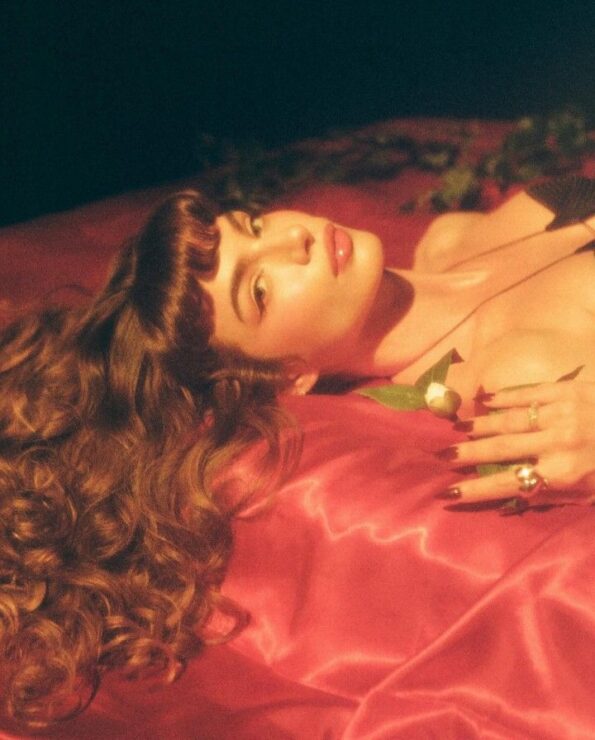
 The part of the psyche ruled by Venus looks around at the chaos of existence, sighs, and says, “Surely we can make this more beautiful, more pleasant.” She is the instinct for affinity, the inner faculty that perceives resemblance, correspondence, proportion, appeal. Where Mercury notices differences and classifies them. Venus notices what belongs together. She sees the matching note in two voices, the shared hunger beneath two different opinions, the color combination that softens the room. It is the desire pulling one body toward another before anyone has prepared a sensible argument. Psychologically, Venus is the intelligence of attraction by which the soul recognizes value. She says, “This is lovely. This is worth moving toward. This person makes something in me tingle.” Venus rules the whole mysterious system by which we prefer, choose, adore, cooperate, decorate, forgive, seduce, and soften. She is the inner yes, the place where life becomes desirable rather than merely survivable.
Her gift is the perception of likeness. Venus can find common ground between people who have spent years lovingly tending to their differences. She smooths rough edges, translates conflict into courtesy, turns it into conversation, and reminds the ego – being right isn’t always as satisfying as being held. She is gregarious. Pleasure often increases when shared. A meal tastes better when someone else laughs across the table. Music deepens when bodies move together. Beauty becomes more real when witnessed. It is where we seek harmony and cooperation. True Venusian harmony is an art. It requires proportion, tact, timing, receptivity, and the ability to sense what will make separate things resonate rather than tolerate each other.
Yet this is also where Venus becomes dangerous. Her instinct to gloss over differences can be gracious, but it can also become denial. She may smooth what should be confronted, sweeten what is actually bitter, aestheticize what is morally rotten, and call it “keeping the peace” when really she is hiding the knives under a lace dress. The old saying Venus harms no one captures her ideal nature, but mythology complicates. Venus, or Aphrodite, isn’t a harmless little cherub sprinkling rose petals over well-adjusted couples. She is seduction, appetite, beauty, erotic power, preference, jealousy, magnetism, and the terrible vulnerability of wanting. She may not march in with a sword, but she can undo kingdoms by making someone desire what they cannot wisely have. Her harms are rarely direct. They are indirect, relational, atmospheric. She doesn’t need to strike anyone down when she can simply make them fall in love with the wrong person at the worst possible time and let everyone do the damage themselves.
This is the great paradox of Venus: if she rules love, why is love so full of harm? Because love exposes value, and wherever value is exposed, fear arrives. To love is to discover something outside your control matters to you. This is undignified. The moment desire enters, so does the possibility of loss. The moment beauty matters, decay becomes threatening. The moment another person becomes valuable, their freedom becomes terrifying.
Desire disturbs arrangements. It reveals lack It awakens envy. It chooses one thing over another, and every choice creates an exclusion. To say “I love you” is also to say, quietly, “You matter differently from others.” This is beautiful, and it is also where the trouble begins, because human beings aren’t always graceful around being chosen, not chosen, replaced, desired, ignored, adored, or abandoned. We are small gods with soft bellies. Venus touches the belly. Her seductiveness moves beyond being only sensual. Venus seduces by making something appear valuable, pleasurable, harmonious, worth approaching. This can be lovely. It can civilize us. But seduction also bends perception. Under Venus, we may see resemblance and ignore incompatibility. We may mistake chemistry for character, charm for care, beauty for goodness, agreement for intimacy.
Venus rules over both Taurus and Libra. In Taurus, Venus is fixed, earthy, sensual, embodied. Here she loves through presence, touch, loyalty, consistency, appetite, taste, rhythm, and the deep animal intelligence of comfort. Taurus Venus wants the good thing to last. She values what can be held, savored, grown, worn, eaten, smelled, trusted. She is the warm bed, the good bread, the beloved chair, the familiar hand, the garden that rewards patience. This Venus knows beauty ripens. Devotion is simply showing up again, making dinner, remembering what someone likes, and refusing to treat love as disposable packaging.
The beauty of Taurus Venus is steadiness. She can make love feel safe enough to inhabit. She brings the soul back into the body, away from abstractions and into the ordinary sacraments: skin, food, music, scent, money well managed, time well spent, affection made tangible. But her difficulty is attachment. Fixed Venus can cling to pleasure, people, routines, possessions, and versions of life that have begun to go stale. She may confuse security with love, comfort with happiness, possession with devotion. She can become stubborn in desire, slow to forgive disruption, resistant to change because change threatens the beautiful enclosure she has worked so hard to cultivate. Taurus Venus may say, “I just want peace,” when what she sometimes means is, “Please do not rearrange my emotional furniture, even if there is a corpse under the sofa.”
In Libra, Venus is cardinal, airy, relational, social, and actively harmonizing. Here Venus initiates relationship. She reaches toward the other. She arranges, mediates, invites, balances, compares, negotiates. Libra Venus is the intelligence of the duet, the handshake, the conversation, the shared aesthetic, the social field. Identity is partly discovered through encounter. The self becomes clearer when reflected in another’s eyes, which is lovely until one starts checking those eyes every five minutes for approval.
The beauty of Libra Venus is grace. She knows how to meet people. She can create ease where there was stiffness, elegance where there was chaos, fairness where there was crude self-interest. She often has a refined sensitivity to proportion, justice, reciprocity, and tone. She can sense when a room is off balance, when someone has been excluded, when beauty needs a better frame, when conflict needs language instead of blunt force. But Libra Venus can suffer from over-accommodation. In seeking agreement, she may lose contact with desire. In trying to be fair, she may become indecisive.
Together, Taurus and Libra reveal the two great movements of Venus. Taurus preserves value; Libra creates relationship. Taurus says, “Let us keep what is beautiful.” Libra says, “Let us make something beautiful between us.” Taurus Venus is the pleasure of continuity. Libra Venus is the art of mutuality. One is the garden wall; the other is the invitation to dine inside it. One is fixed, loyal, sensuous, sometimes possessive. The other is cardinal, graceful, initiating, sometimes evasive. Both are Venus, but one loves by rooting, the other by relating.
This dual rulership also reveals why Venus isn’t simply sweetness. In Taurus, she can become greedy, stubborn, indulgent, possessive, overly attached to comfort. In Libra, she can become superficial, conflict-avoidant, manipulative through charm, addicted to approval, or so determined to be reasonable, she forgets to be real. Venus’s shadow is sometimes it is the harm of seduction. She may not wish to hurt anyone, but she can hurt by refusing to disrupt what is pleasant enough to question. And yet, without Venus, life becomes brutally functional. We would communicate, work, compete, reproduce, pay bills, and then die. Venus insists that existence must also be enjoyed. She gives us elegance, friendship, romance, pleasure, music, adornment, tact, cooperation, and the strange human need to put flowers on tables.
Venus’s deepest psychological function is value. She reveals what we believe is worth our time, our body, our loyalty, our money, our compromise, our longing. This is why love hurts: because love is value embodied. When we love unwisely, we suffer from the other person, but also from our own misplaced valuation. We realize we gave attention to something that could not hold it. We dressed a red flag in silk and called it destiny. So Venus harms no one in essence, perhaps. But love, desire, and beauty aren’t harmless forces once they enter human hands. We clutch, project, bargain, decorate, manipulate, idolize, avoid, and ache. Venus gives the rose; we invent the thorny drama of who deserves it, who neglected it, who sent one to someone else, and why it was not the exact shade we secretly wanted. This is the comedy and tragedy of Venus. She offers connection, pleasure, and harmony, and we bring our insecurity to it.
Still, at her best, Venus remains one of the great healers of the psyche. She teaches us to perceive likeness, to cooperate, to desire, to make peace, and to choose beauty. She says, “Come closer. Let us make something lovely.”
Venus is the private curator of the soul. She walks through life and decides what gets admitted. This, yes. That, absolutely not. This song, this face, this fabric, this kind of laugh, this shade of blue, this old wooden table, this glittering object serving no practical purpose whatsoever but somehow makes the heart do somersaults. She rules this sort of value. Value is more than what something costs; it is what something awakens. It is the invisible yes rising inside us before we can explain it without sounding faintly unhinged.
Taste is one of the great proofs – human beings have very different tastes. Someone plays a song moving them to tears, and you sit there ice cold. Then you play them your beautiful, life-altering masterpiece, and they blink at you with no emotional engagement whatsoever. Nobody is wrong, which is deeply annoying because being right about music would be so satisfying. Venus is subjective in this sense. She doesn’t measure beauty with a ruler. She recognizes affinity. She responds according to memory, temperament, body, culture, longing, wound, pleasure, and some mysterious little internal tuning fork (the Venusian sign and aspects) that knows what it knows. Venus is intimate. Our tastes reveal us. Not completely, of course; no one should be psychologically prosecuted for liking one questionable song.
But what we love shows what we are drawn toward, what we find pleasurable, exciting, dignifying, delicious, erotic, familiar, forbidden, or alive. The person who loves classical art and traditional music may be responding to order, refinement, continuity, proportion, restraint, inheritance, the feeling that beauty has survived time and therefore might help them survive another day. There can be a reverence in it, a desire for form strong enough to hold emotion without spilling it all over the carpet. Another person may feel their Venus wake up only around the rough, strange, colorful, eclectic, irregular, and slightly dangerous-looking. They don’t want beauty to behave itself. They want beauty with chipped paint, loud boots, neon edges, smoke in its hair, and a story it refuses to tell. Their pleasure may come from contrast, surprise, texture, rebellion, sensual disorder. They want the thing that makes the soul crackle. This too is Venus. She isn’t always soft pastels and harp music. Sometimes Aphrodite arrives in red leather, laughing too loudly.
What we adore often tells the truth faster than what we claim to believe. Values are enacted preferences. They are visible in the people we chase, the art we keep returning to, the homes we create, the clothes we feel like ourselves in, the pleasures we defend, the compromises we make, the beauty we are willing to suffer for, and the attention we give away like gold coins to anything that shines in the right way. Venus asks, “What do you love enough to choose?” Many people say they value peace, then repeatedly fall in love with emotional fireworks. Many say they value depth, then pursue only what flatters them. Venus, with her little knowing smile, notices. Venus is morally interesting. She isn’t only about what we like; she is about what we can be seduced by. And aesthetic pleasure can seduce. Comfort can seduce (Venus in Cancer). Status (Venus in Capricorn) can seduce. Approval can seduce. Being desired can seduce. Being needed can seduce. Even suffering can seduce (Venus-Neptune)if it makes us feel special enough. Venus shows where the soul is persuadable, where we become soft, where we say yes before the wiser parts of us have finished reading the terms and conditions.
Her charm is part of this. Venus often prefers not to force. Force is so Mars, so obvious. Venus would rather make agreement feel pleasant. She draws rather than pushes. She attracts rather than attacks. She smiles, flatters, beautifies, offers sweetness, creates atmosphere, arranges conditions so that people want to participate. This can be genuinely graceful. There is nothing wrong with charm when it is used to create ease, delight, affection, and cooperation. A well-developed Venus knows how to ask in a way that lets the other person feel generous rather than cornered. Human beings are far more willing to help when they are not being treated well.
But charm has a shadow, and Venus knows exactly where the good lighting is. Venus may get others to do things for her through beauty, sweetness, helplessness, desirability, social pressure, or the subtle performance of being too lovely to disappoint. She can turn wanting into an art form and asking into a faintly scented trap. like your own inspired idea. Very elegant. Slightly criminal. Excellent cheekbones. Compliments are currency. Beauty is influence. Affection is persuasive. Desire negotiates. The social world is full of soft transactions, and Venus is fluent in them. The trouble begins when charm replaces honesty, when seduction replaces consent, when beauty becomes leverage, when sweetness is used to avoid accountability. A person may become so skilled at being pleasing, they never directly ask for what they want.
Venus can also use attractiveness, literal or symbolic, as a kind of power. Beauty opens doors. Warmth opens hearts. Taste creates status. Social grace wins allies. These are real forms of influence, and pretending otherwise is naïve. But the person strongly identified with Venus may become dependent on being wanted, admired, chosen, or aesthetically approved. Their self-worth may begin to live in other people’s eyes. They may confuse being desired with being valued, being praised with being known, being pleasing with being loved. This is one of Venus’s deepest wounds: without charm, beauty, usefulness, style, or softness, there may be nothing left others would choose.
In relationships, Venus shows how we attract. Some attract through warmth, some through elegance, some through sensuality, some through wit, some through competence, some through artistic weirdness, some through a wounded magnetism, t seems to make emotionally unavailable people appear from the bushes. Venus describes the bait we cast, often unconsciously. But it also describes what we hope will be recognized in us. When someone loves what we love, we feel less alone. Shared taste can feel like proof of shared soul, which is beautiful, though sometimes wildly inaccurate. Two people can both love the same obscure band and still be catastrophically unsuited to living together.
There is no universal object of desire, no single beauty conquering all eyes, no one art form, body type, style, sound, or flavor. What leaves one person cold may intoxicate another. This should humble us. Still, our tastes aren’t always innocent. Sometimes we are drawn to what confirms an old wound. Sometimes we call something “my type” when we really mean “the familiar shape of my unresolved problem wearing nice clothes.” This is Venus as values in the deeper sense. She reveals priority. Each Venus has its bargains. Each love has its cost. To know your Venus is to know what you may overpay for, where you may undercharge yourself, and what kind of beauty can make you temporarily stupid in a way that feels like destiny.
Under Venus, we can enjoy beauty without being enslaved by it. We can recognize value without needing universal applause. She lets us say, “This is mine to love,” without needing the entire room to agree. That is a surprisingly mature pleasure: to let another person dislike your music and not experience it as a tiny assassination.
Venus is the planet of adoration, but adoration must grow up. Young Venus says, “Love me because I am pleasing.” Mature Venus says, “Meet me where I am real.” Young Venus seduces to secure. Mature Venus invites and allows. Young Venus glosses over difference to preserve the fantasy. Mature Venus can admire difference without panicking. Young Venus uses charm to get needs met indirectly. Mature Venus can still be charming, thank heavens, but she no longer hides the need. The great grace of Venus is she makes life desirable. She gives us songs to save us, colors to restore us, people whose presence changes the room, textures to calm the animal body, flavors to make the day less grim, and little aesthetic loyalties that tell us who we are. She is why one person weeps over Bach and another feels spiritually revived by a rock song. She is why we decorate, flirt, cook, choose, collect, kiss, curate, and care. She is why the world is adored in fragments.
Venus is receptive, magnetic, persuasive, selective. She draws, attracts, inclines, softens. She waits for what she wants to come closer, adjusts the lighting, smiles in a way to make resistance seem vulgar, and lets desire do its quiet, expensive work. This lack of force can be part of her grace, but also part of her trouble. Venus may want deeply. She may long for love, beauty, pleasure, affection, reassurance, loyalty, devotion, romance, admiration, or peace, yet she may prefer invitation to pursuit. Venus and her aspects can describe what a person desires in relationship. Some people desire fun, lightness, flirtation, laughter, movement, shared pleasure. They need play in intimacy, or the relationship begins to feel too grown up with occasional kissing. Others desire depth, intensity, emotional nakedness, feeling love should take them beneath the surface and show them what is hidden in the soul.
Some desire seriousness, loyalty, promises that hold their shape, love must arrive on time and remember where the spare keys are. Others desire magic, enchantment, sensing love should open a secret door in the universe and suddenly everything is charged with meaning. They don’t want merely to be partnered. They want to be transported. They want love to rearrange the air. Ordinary affection may seem sweet, but insufficient. This is where Venus becomes complicated, because desire is never only about preference. It is also about self-worth. What we believe we deserve shapes what we reach for, tolerate, refuse, idealize, sabotage, and mourn. A difficult Venus aspect can point toward wounds in value: the sense of being unlovable, undesirable, too much, not enough, hard to choose, easy to leave, only wanted when pleasing, useful, beautiful, agreeable, exciting, or emotionally convenient.
Self-worth issues and relationship issues are often tied together. Relationships become the stage where value is tested. Love asks, “Can you receive?” Wounded Venus says, “Probably not without earning it.” Love asks, “Can you choose?” Wounded Venus says, “Only if they choose me first.” Love asks, “Can you be seen?” Wounded Venus replies, “Yes, but only from this flattering angle, after I have hidden the unacceptable parts in a cupboard.”
A troubled Venus may therefore chase what repeats the wound. It may desire people who are unavailable, inconsistent, idealized, overpowering, glamorous, wounded, distant, dangerous, or impossible to satisfy. The psyche often mistakes familiarity for fate. If love was once uncertain, uncertainty can feel erotic. If affection had to be earned, indifference can feel like a challenge rather than a warning. If beauty was used as currency, being desired can feel like safety, even when it is only hunger looking for a place to sit down. Venus can turn old pain into preference, which is one of the more elegant ways the human heart ruins its own afternoon.
When Venus contacts Uranus, Neptune, or Pluto, desire is often pulled beyond the ordinary. These aren’t always easy combinations because they ask Venus to love something larger, stranger, more disruptive, or more consuming than simple comfort. The person may not be satisfied with conventional affection alone. Love should awaken, dissolve, transform, liberate, intoxicate, reveal, or resurrect something. This can make ordinary relationship feel too small, too predictable, too domestic, too neatly folded.
Venus with Uranus often desires freedom, electricity, difference, surprise. Love must feel alive, not caged. Attraction may come suddenly, like lightning. The person may be drawn to the unusual, the unavailable, the brilliant, the eccentric, the socially strange, the one who makes the heart feel as if it has discovered an alien spacecraft in a forest. There is beauty in this: the refusal to let love become ownership, the courage to desire authenticity, the ability to love outside the norm. But there can also be restlessness, inconsistency, fear of being trapped, or a tendency to confuse instability with aliveness. Ordinary love may feel dull after lightning, but eventually even lightning has terrible follow-through.
Venus with Neptune desires transcendence. It wants soul-love, dream-love, music-through-the-walls love. It wants compassion, enchantment, spiritual merging, the beloved as muse, savior, angel, ocean, narcotic, cathedral, and possibly unpaid therapist. This can produce extraordinary compassion, artistry, devotion, and the capacity to love beyond ordinary ego boundaries. But Neptune also fogs the mirror. The person may fall in love with potential, projection, suffering, fantasy, or the beautifully edited trailer of someone who, in daily life, cannot answer a text or own a working kettle. The longing is real, but the object may be half-imagined. Venus-Neptune must learn – love can be magical without requiring blindness as an entrance fee.
Venus with Pluto desires depth, intensity, possession, truth, transformation, and emotional totality. It rarely wants a pleasant arrangement. It wants the hidden room, the locked drawer, the secret wound, the part of the beloved that has never been touched by anyone else. This love can be profoundly healing because it refuses surface falseness. It can bond through honesty, loyalty, erotic power, and the courage to face shadow. But it can also become obsession, control, jealousy, compulsion, power struggle, or the belief if love isn’t slightly annihilating, it must not be real. Venus-Pluto can mistake emotional danger for intimacy and then wonder why the relationship feels exhausting.
These outer-planet Venus contacts can be harder to satisfy on ordinary levels because the desire is for an experience of awakening. Uranus wants love to free the self. Neptune wants love to dissolve the self. Pluto wants love to transform the self. These are enormous demands to place on another human being. The beloved becomes a doorway to some larger psychic process, and the relationship carries symbolic weight far beyond its actual capacity. The person may struggle to explain what they want because what they want is some beyond this world. This can bring crisis. When Venus is stretched by these deeper forces, love may arrive with disruption, sacrifice, obsession, longing, loss, revelation, or sudden change. Relationships may become catalysts rather than comforts. They may expose wounds around worth, abandonment, desire, control, fantasy, freedom, and surrender.
But this is also where life-changing love can happen. Life-changing love isn’t necessarily the love that stays forever; it is the love that reveals forever. It shows a person what they desire, what they fear, what they have been settling for, what they cannot pretend anymore, what part of themselves has been asleep. Uranus may bring the lover who breaks the cage. Neptune may bring the lover who opens compassion and imagination, even if it also teaches the cost of illusion. Pluto may bring the lover who drags the buried self into daylight, kicking, screaming, and somehow more alive.
The danger is expecting every relationship to operate at this level all the time. No human connection can remain permanently electric, mystical, or transformative. Even the most fated love must learn to exist in ordinary life. Bills still arrive. Bodies get tired. Someone has to clean the sink. The great test for these intense Venus patterns is whether the extraordinary can be integrated into the ordinary, whether magic can survive routine, whether depth can coexist with kindness, whether freedom can coexist with commitment, whether passion can coexist with emotional safety. Otherwise, love becomes an addiction to peaks, and the valleys are mistaken for failure.
Venus pulls. It magnetizes. It seduces the will into motion. People will cross oceans, betray principles, write poems, ruin marriages, change countries, reinvent themselves, and buy absurdly expensive candles because Venus has decided something matters. Her force is gravitational. She places beauty, affection, pleasure, or longing in front of someone. When awakened by the outer planets, she may refuse small satisfactions because something in her remembers the taste of the infinite. This can make life difficult. But it can also make love bigger. What the heart desires are are clues. Some lead to gardens. Some lead to cliffs. Some lead to mirrors. Some lead to the person you become after you finally stop begging to be valued by those who were never equipped to recognize your particular kind of gold.
Venus is vain in all of us. It is no moral failure. A part of the soul wants to be seen in the right light, adored by the right eyes, chosen with a certain unmistakable enthusiasm. Vanity becomes ugly only when it loses its innocence and starts demanding the whole world kneel before its mirror. But in its softer form, vanity is just the human wish to feel attractive, worthy, deliciously alive in one’s own skin. It is the little inner Aphrodite saying, “Must we really shuffle through existence looking like an apology?”
Seduction is the ability to draw life toward us. It is charm, style, grace, warmth, beauty, sweetness, humor, softness, magnetism, the mysterious arrangement of qualities that makes others lean closer. Some people seduce with elegance. Some with laughter. Some with intelligence. Some with vulnerability. Some with competence so satisfying it feels mildly erotic. Attraction is a language, and every person speaks it differently. But some take it too far. Venus can become addicted to being wanted. She can turn beauty into a weapon, charm into manipulation, desirability into a substitute for selfhood. When this happens, the person may no longer enjoy being attractive; they become dependent on it. Venus, when inflated or it’s often more deep lack of self worth, can become the desperate need to be adored at any cost, even if the cost is honesty, loyalty, dignity.
Yet there is another Venus wound. It looks almost opposite. The person who cannot relate to their Venus at all. They may be detached from beauty, pleasure, adornment, desire, softness, receiving. They may underdress from resignation. They may say, “Nothing looks good on me.” Or they may insist, “Those clothes are too good for me” Their Venus is exiled. She is sitting in the corner of the psyche wearing a gorgeous dress no one has given her permission to put on. This is not really about clothing, of course, though clothing is one of the most visible places the wound shows itself. It is about worth. The body becomes the battlefield where self-value gets negotiated badly. The person won’t wear the beautiful thing because they are waiting to become someone who deserves it. Thinner, happier, richer, more confident, more loved, less tired, less broken, less human. So the dress hangs in the wardrobe like a promise postponed. The shirt waits. The shoes wait. The perfume waits. The good coat waits. And life, being a little pickpocket, keeps moving.
So many people own garments that aren’t really clothes anymore; they are emotional hostages. They sit in the wardrobe waiting for the mythical future self to arrive, the one who is finally beautiful enough, successful enough, healed enough, desirable enough to wear them. But this future self is often just the present self with fewer excuses. Venus would never say, “Save it for a special occasion.” Venus would kick the wardrobe door open and say, “Put on the damn clothes now.” Wear the good dress to buy bread. Wear the beautiful shirt to sit in your kitchen. Wear the earrings while answering emails. Use the expensive soap. Burn the candle. Stop treating beauty like it needs a permit from the Ministry of Self-Esteem. We all need this Venus sometimes.
To relate to Venus is to allow yourself to have taste, desire, pleasure, preference, appeal. It is to stop outsourcing your attractiveness entirely to other people’s approval. It is to stand before the mirror as a friend with standards and mercy. Venus doesn’t ask everyone to look glamorous, polished, or traditionally beautiful. She asks for relationship with one’s own value. For some, this means silk and lipstick. For others, boots, bare skin, tattoos, linen, color, scent, softness, wild hair, clean lines, strange jewelry, or the radical eroticism of wearing clothes that actually fit. The wounded Venus may distrust all this. It may call beauty superficial because beauty has hurt it before. It may reject adornment because being seen once felt unsafe. It may mock vanity because wanting to be desired feels humiliating. It may choose plainness as armor, invisibility as control, deprivation as dignity. There can be intelligence in this defense. If attention brought criticism, envy, danger, shame, or unwanted expectation, then of course Venus learned to dim the lights. The psyche isn’t stupid. It hides its jewels when thieves have been around. But the tragedy is that eventually the hiding place becomes a prison, and the person forgets they ever owned jewels at all.
Venus’s vanity, in its healthier form, is an antidote to this. It says, “Let yourself be pleasing to yourself.” Not for the crowd. Not for the lover. Not for the imaginary panel of judges in your head who apparently have nothing better to do than evaluate your thighs. For yourself. There is a holy mischief in dressing well when no one is watching, in adorning the body on an ordinary day, in choosing beauty without needing an audience. It says the body is also a place where delight can live.
Then there is now the matter of Venus and marriage. Venus is often connected with love, attraction, union, pleasure, and relationship, but she isn’t, in her rawest mythic form, the goddess of marriage. That honor belongs more properly to figures like Hera, with all the vows, contracts, legitimacy, loyalty, status, and household thunder marriage can involve. Aphrodite belongs to desire, beauty, erotic magnetism, the shimmering pull between beings. She is what makes people want each other before anyone has discussed shared finances. She is the spark, the sweetness, the seduction, the rose-colored madness persuading two people – perhaps sharing a life is a reasonable idea.
The myths make this distinction rather loudly. Aphrodite is married to Hephaestus, the skilled and wounded craftsman god, but her desire famously wanders to Ares, god of war. This is no neat advertisement for domestic stability. It is a mythic confession. Beauty may be wedded, but desire isn’t easily domesticated. Aphrodite’s love affair with Ares brings together erotic pleasure and aggression, seduction and conflict, the bed and the battlefield, which is unfortunately a combination many humans keep mistaking for chemistry. The story doesn’t make Venus evil; it reveals that desire is powerful, unruly, and not automatically ethical just because it feels divine.
Aphrodite also appears in stories where beauty becomes rivalry, consequence, and fate. She is involved in the judgment of Paris, where her promise of the most beautiful woman helps ignite the chain of events leading to the Trojan War. Again, she does not need to swing a sword. Venus rarely does the sweaty part. She offers desire, and humans proceed to set entire cities on fire because apparently we cannot be trusted with pretty things. This is Venus’s mythic danger: what we love can reorder our values. What we desire can seduce us away from wisdom. Beauty can become a doorway to transcendence or a trapdoor into catastrophe, depending on how much self-knowledge we bring to the party.
Yet it would be too easy to scold Venus for this. Love outside marriage, desire beyond duty, beauty disrupting the order of things. Marriage may organize relationship, but Venus animates it. Without Venus, marriage can become a prison. Without commitment, Venus can become a trail of perfume through burning rooms. The mature psyche needs both: the Venusian ability to desire and delight, and the Hera-like capacity to honor bonds, responsibilities, and consequences.
Venus, then, is no harmless god. She is the power of value made visible. She is why we preen, decorate, seduce, compare, crave, choose, envy, adore, and sometimes behave like fools with impressive emotional range. She is vain because value wants reflection. She is seductive because desire wants movement. She is wounded where we cannot receive beauty, cannot believe in our own appeal, cannot let ourselves enjoy what we secretly long for. She is dangerous where charm becomes manipulation, where attractiveness becomes identity, where pleasure becomes avoidance, where love refuses responsibility.
But her healing is just as real. Venus heals through pleasure without the need to ask for permission. Through beauty returning us to ourselves. Through the quiet rebellion of wearing the good clothes before we feel ready. Through learning to be attractive to our own eyes. Through letting ourselves want without groveling, seduce without deceiving, adorn without apologizing, and love without pretending desire is the same thing as devotion. The wardrobe full of unworn clothes is a shrine to delayed self-worth. Venus wants the shrine dismantled. She wants the dress in daylight, the jacket in the street, the fragrance on the skin, the body included in the life it has been carrying around for years. Waiting to feel beautiful before allowing beauty into your life is like waiting to feel warm before lighting the fire. Put on the damn clothes. Not because clothes fix the wound. They do n’t. But because sometimes the soul needs a small, gorgeous act of defiance against the lie that you must become more before you are allowed to enjoy being here.