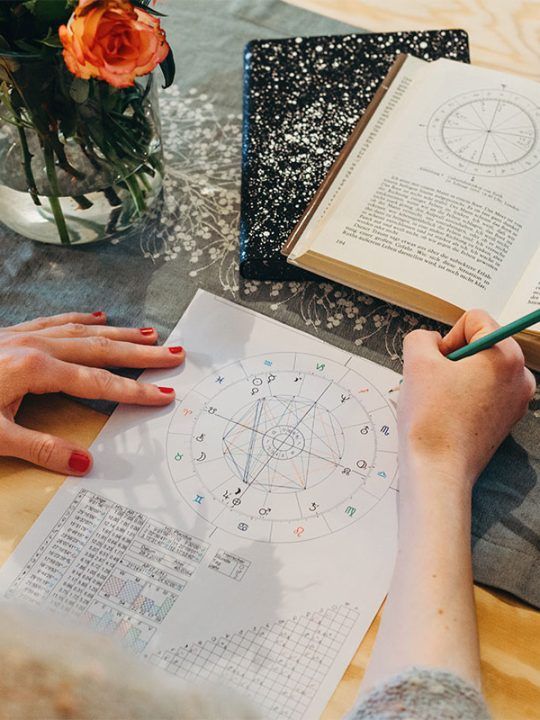
 Having immersed myself in various mediums through which new students engage when delving into the realm of astrology, I have garnered a good understanding of the advantages and disadvantages each platform offers. This multifaceted experience equips me with the ability to provide insightful advice to others on this same astrological journey. Beginning with astrology forums, these digital spaces undeniably exhibit an enticing blend of entertainment and interactivity. Yet, upon closer examination, they reveal their limitations when it comes to substantial knowledge in this subject. The sheer multitude of diverse perspectives showcased within these forums can be overwhelming. The proliferation of distinct viewpoints often leads to prolonged debates spanning the diverse branches of astrology. Moreover, the many paths these discussions frequently take can meander into irrelevant exchanges.
The interactive nature of these platforms has an attractive quality to share and communicate your astrological findings. However, the nature of these conversations can easily divert learners from the cohesive understanding of the complexities of astrology. While astrology forums offer an avenue for engagement and expression, they do not stand as the optimal arenas for proper learning. Aspiring astrologers would be wise to seek out more focused resources.
Astrology forums are interactive and buzzing with energy. You jump in, and you’re suddenly part of community, sharing your two cents, your astrological a-ha moments. But, truth be told, while they’re a blast, there’s a whole jumble of perspectives, like constellations in a starry night sky, you’re going see them all, and some might even lead you astray. You’re also caught in the crossfire of endless debates. Different branches of astrology duking it out, and half the time, you end up in conversations that veer off into space, nowhere near the knowledge you’re after.
Astrology blogs in their essence are more than repositories of opinion or information; they are reflections of consciousness. Unlike the formality of traditional journalism or the distraction of social media, blogs breathe with the rhythm of the person who wrote them. They’re felt. When one stumbles upon a blog, it has the vibe of the soul writing it. There is something intimate in reading a blog. It is unfiltered by editorial shackles or commercial demands. Blogs, unlike other media, have the power to be both immediate and eternal. They are living archives, constantly updated yet always reflective of the moment in which they were written. A blog post from five years ago can read like a forgotten letter from a past version of someone. And when you read it, truly read it, you glimpse the unfolding of a personality. The shift of a worldview in motion.
In a world where attention is bartered and broken down to fragments, blogs stand quietly defiant. They are the thoughtful pause, the drawn-out exhale, the human hand waving from within the algorithm.
Blogs are expansive, evolving, and deeply personal. They thrive on regularity. Each post builds upon the last. It’s an ongoing conversation. This regularity informs as much as it invites. It allows the reader to grow alongside the writer, to sync their curiosity with the tempo of the stars and the temperament of the interpreter. By contrast, astrological websites carry a different gravity. There is beauty in both. Some seekers prefer the immediacy and intimacy of a blog, where they can trace the astrologer’s thought process in real-time, imperfections and all. Others are drawn to professional sites, where it is more formal and a lot less is said.
What’s wonderful about blogs is that they’re the people’s website, and they’re updated regularly. Astrology blogs are digital hubs, web-zines dishing out astro-goodness daily, weekly, or monthly, depending on the astrologer’s mental output. So, you can always count on getting your fix of astro-insights and perspectives. But, let’s keep it real, there’s a catch. Not all blogs dive deep into the nitty-gritty stuff. Sometimes, they skim the surface when you’re craving a deep dive. Astrology is deep, and some of us hunger for those deeper interpretations and readings that unravel the universe’s secrets. Your favorite astrology blogs are like corner cafes (cozy) where astrologers, both seasoned and just-hatched, pour their insights onto the page. Blog posts become rituals of connection. Weekly horoscopes, astrological interpretations, lunar musings, and transit survival guides. Some posts may feel more like astro-snippets skimming the surface but leave the deeper waters untouched. Astrology, at its core, is a language of soul and psyche. And while blogs are an incredible medium for sharing it, not every blog dares to dive into the undercurrents. Some do, mind you. But they are rare birds in a sky full of chirps. Still, this isn’t a condemnation. It’s just the nature of the beast. The freedom that makes blogs feel more alive than business driven websites. It is their DIY spirit, their personal tone, their immediate availability. But even the lighter fare has its place.
Now we’re turning the page, quite literally, into the hallowed halls of books. In the pursuit of astrological knowledge, blogs may be the conversation, but books are the deep silences that follow, the parts where insight truly takes root. Books, unlike their digital cousins, are often labors of devotion. They carry the weight of time and contemplation. A well-chosen astrology book teaches you what Saturn means. What it feels like. How it presses into the psyche, leaves fingerprints on the soul, and asks you to grow up, show up, and stop ghosting your karmic responsibilities. But here lies the problem: not all astrology books are created equal. Some are dense and dripping with jargon, the kind you read with a a glossary on standby. Others are watered down to pop astrology at its best. This is why a bit of discernment is essential, choosing works that speak to your intention.
If your heart leans towards the psychological, Carl Jung peeking from the corner of your mind, you might seek out texts that explore the inner archetypes and shadow work in their planetary patterns. If you’re a practical soul, there are workbook-style guides that lay astrology out like a manual, step-by-step with diagrams and no hex keys required. And for those whose feet barely touch the ground because your spirit’s already in the Pleiades – the mystical, soul-rich volumes await.
This diversity reflects the magnificent sprawl of astrology itself. You can approach it like a researcher, a seeker, or a mystic, and still find something worthwhile in its teachings. The key is knowing why you seek, and then choosing books to reflect your hunger. Research before you buy. Read reviews, follow trusted astrologers, look out for the titles that have stood the test of time. And then, read slowly. Take notes. Argue with the author. Chart your own transits as you go. Let the books be your companions on this spiral path of astrological exploration.
Don’t just go buying any old book with stars on the cover. No, no, no! Do a little research, find stellar recommendations, and save yourself from the black holes of useless information. But here’s where the rubber meets the road, my starry-eyed wanderers. Watch it all unfold in the lives of your fellow Earthlings. But don’t go getting ahead of yourself, thinking you’ll be teaching Astrology 101 tomorrow. It takes time. (Don’t come for my job!)
Learning astrology is about knowing the glyphs. These symbols are the chart. They represent energies, archetypes, and ancient understandings condensed into tidy little emblems. Each one, whether it’s the proud Leo ♌ or the mischievous wings of Mercury ☿, carries centuries of myth, meaning, and mystery. To know them is to begin speaking the language of the stars. They allow astrologers to see at a glance what’s happening in a chart. And yet, glyphs alone won’t get you far unless you pair them with their matching companions: the keywords are the essential qualities that define each sign, planet, and house. Mars? Think drive, desire, war. Venus? Love, beauty, and the irresistibly well-lit selfie. Each planet has its vibe. Each sign, its style. Each house, its realm of influence.
The houses are the great stages upon which our planetary dramas unfold. They root the abstract into the earthly. It’s one thing to know that Mars is aggressive and ambitious. But Mars in the 7th house? It’s assertiveness in partnerships. Conflict in relationships. Passion that might either burn bright or burn bridges. Context is everything. Understanding the houses gives depth to your interpretations. Suddenly, the drama of your chart isn’t floating in space; it’s happening in your career, your health, your love life, your relationship with your weird neighbor. This foundational knowledge of glyphs, keywords, house meanings is essential. It is the bones of the chart. The grammar of the universe. Master it, and the birth chart stops being a riddle and starts becoming a revelation. The symbols will begin to talk to you.
This astrological language isn’t for a select few who grew up under a particular starry sky. This is a universal tongue. It doesn’t matter if you’re from London, Mumbai, or Timbuktu, when we see these symbols, we all nod our heads in universal recognition. But why dive into this astrological rabbit hole? Well, it’s like being handed a mirror that reflects your soul. You learn about your quirks, your strengths, your shadows. And why am I so drawn to this whole astrology thing? Well, human behavior is a an enigma, isn’t it? We’re walking contradictions, full of dreams and desires, making choices that can baffle even ourselves. Astrology offers a lens to understand why we do the things we do.