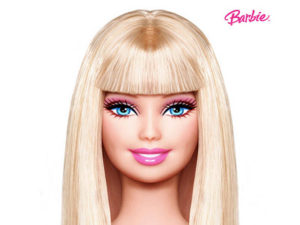
 Astrologer Hazel Dixon-Cooper says that the “The Libra man is an idealistic dreamer who believes in world peace and fair play. He will take you to the most expensive restaurant…He wants a Barbie Doll to cook, clean, and entertain his endless procession of casual friends. He’s superficial. A Libra man prefers beauty to substance and expects to be blindsided by the emotion of a perfect love.” This description isn’t really trying to diagnose “Libra men” as a species. It’s a satire of a particular kind of romantic energy: the person who loves the idea of love more than the lived, slightly awkward, occasionally smelly reality of being close to another human being. People who talk a lot about harmony sometimes mean something beautiful, like a devotion to balance and justice. But sometimes “harmony” is just conflict avoidance. The dream of fairness becomes a way to keep everything pleasant, smooth, curated – no raised voices, no difficult truths, no messy grief, no inconvenient needs. The expensive restaurant can be a beautiful date, sure, but in Hazel’s version it’s also a diversion: spectacle replacing substance.
The “Barbie Doll” line is the nasty little hinge of the whole thing, because it exposes a deeper problem than superficial taste. It suggests the fantasy isn’t simply “a beautiful partner”; it’s a partner who is beautiful and also compliant, decorative and also useful. In this view, the ideal woman isn’t a person, she’s a service with a face. Cook, clean, entertain his “endless procession of casual friends” – and notice the entitlement buried in that: not only does he want a caretaker, he wants her to be endlessly socially accommodating and smiling while she’s at it. Many people have felt the pressure to become a role instead of remaining a human: the “cool girlfriend,” the “hostess,” the “low-maintenance beauty,” the emotional shock absorber who keeps the atmosphere pleasant while quietly swallowing her own needs.
When Hazel calls him superficial, the sting isn’t that he likes beauty. Beauty is not a crime. The issue is when beauty becomes a substitute for something deeper. Substance has opinions and moods and boundaries. Substance sometimes cries at inconvenient times and says, “Actually, I didn’t like that,” and this threatens the polished surface. And if you’re dating someone like that, you eventually start to feel like you’re being appreciated in the way one appreciates a painting: admired, displayed, but not met.
It’s a hard take, and it’s deliberately sharpened for entertainment. Hazel’s doing the tabloid-astrology thing where you take a handful of recognizable traits, crank the dial to maximum, and then serve it with a wink and a slap. It’s less “this is what Libra men are” and more “here’s the worst-case version of someone who chases harmony, beauty, and romance like they’re collectibles.” Libra symbolism is balance, aesthetics, partnership, social grace. Those can be gorgeous qualities: someone who genuinely wants fairness, who can see multiple sides, who knows how to create ease, who values beauty. But if those traits are underdeveloped or used defensively, the shadow version could look somewhat like what she’s describing: charming but conflict-avoidant, romantic but performative, devoted to appearances. It’s not “Libra = superficial,” it’s “a person who uses charm and ideals to avoid depth can end up superficial.”
Also, the “Barbie Doll” bit is doing a lot of work. It’s not really an astrology critique so much as a critique of a certain old-school expectation of women – she’s spinning a cultural stereotype (the decorative domestic entertainer) onto a Libra-flavored man (social, stylish, partnership-focused). It’s punchy, but it isn’t exactly nuanced. It’s fair as satire, unfair as a verdict. If you’ve met a Libra man who’s emotionally mature, he’ll look nothing like this.
If Libra is the sign that longs for harmony, then the temptation is to confuse harmony with flawlessness. Harmony is actually alive. Flawlessness, on the other hand, is dead. Flawlessness is a showroom. Barbie is the showroom: an icon of control over the unruly truth of being human. She doesn’t sweat, she doesn’t age, she doesn’t have a bad day where she says something awkward and then thinks about it for six years. So Barbie can stand in as a symbol for the Libran hunger for symmetry, but I’d put a little warning label on it: this hunger can be a genuine appreciation of beauty and fairness… or it can be someone who is frightened of conflict, uncertainty, or emotional chaos, they so they reach for “perfect.”
The “Barbie” idea isn’t really about liking a pretty partner. Most of us like beauty. It’s about preferring a partner who stays aesthetically and emotionally manageable. A human being, properly lived, comes with asymmetry: grief, desire, irritation, inconvenient emotions, boundaries, bodily realities, changing moods. If the ideal is “symmetry and perfection,” then a real partner will eventually feel like a disruption. Libra’s relationship-focus can also mean someone who’s exquisitely attuned, who wants mutuality, who notices imbalance and tries to restore it, who finds beauty in proportion – like a good room, a good conversation, a good apology.
The metaphor is strong, as long as we don’t stop at the surface. Barbie-as-ideal isn’t “Libra’s destiny,” it’s Libra’s shadow temptation: the longing for a partner who completes the picture rather than a partner who complicates the story. The mature Libran pursuit isn’t perfection; it’s peace with honesty inside it. Not symmetry at any cost, but balance that can survive reality.
Liz Greene believes that the sooner the Libran man climbs down the Ivory Tower which is his protection against emotional pain and disillusionment, the sooner he can begin the real work, which is first to marry the conflicting sides within himself. Whether it’s his intellect and his emotions, his maleness and his femaleness, his spirituality, and his materialism. Greene is doing something very different from Hazel there. Hazel’s throwing darts at a caricature; Greene is pointing at an inner world. The “Ivory Tower” isn’t just snobbery or aesthetic fussiness in her framing – it’s a place of safety. It’s the elegant mental apartment you retreat to when feeling is too raw, too unpredictable, too capable of disappointing you. And for a Libran type, this retreat can look deceptively charming because the tower is furnished with courtesy, reasonableness, taste, and “let’s be fair.” But the point is: it’s still a retreat.
The Libran man often protects himself from emotional pain by living in the realm of ideas, ideals, and relationship concepts rather than the bodily immediacy of actual feeling. He can talk about love beautifully, theorize about harmony, negotiate like a diplomat, even appear deeply considerate – while still not fully inhabiting his own emotional life. It’s not that he has no feelings; it’s that the feelings are dangerous, because they threaten the image of balance. Disillusionment is especially threatening to a Libran psyche because Libra invests heavily in the possibility of “rightness” – the right partner, the right dynamic, the right tone, the right outcome. When life inevitably proves untidy, it can feel like a kind of betrayal of the whole premise.
So “climbing down” means choosing incarnation over concept. It means giving up the fantasy that you can think your way into safety. And the “real work” being “to marry the conflicting sides within himself” is classic Jungian language – integration. Libra is symbolized by the scales, and Greene often treats signs as psychological patterns: the Libran dilemma is the pull between opposites, and the habit of trying to resolve this tension externally. In other words, rather than tolerating inner conflict – “part of me wants freedom and part of me wants closeness” – the Libran tendency is to seek a relationship or an ideal that will make the conflict disappear. “If I find the right person, I’ll feel whole.” But this is outsourcing wholeness. It makes the partner responsible for your internal treaty negotiations.
The intellect and emotion, masculinity and femininity, spirituality and materialism, these are polarities most people carry, but that Libra can feel with particular intensity because Libra’s orientation is relational and reflective. Libran types often experience themselves through mirroring – “Who am I in the eyes of the other?” This can be a gift of empathy and social intelligence. But it can also become a trap: identity becomes contingent, and the inner contradictions don’t get owned; they get managed via presentation. The tower, then, isn’t arrogance – it’s self-protection through refinement.
Integration doesn’t mean picking one side and rejecting the other. It’s not “be less intellectual and more emotional” or “be more masculine” or any of this reductive nonsense. It’s learning to hold the tension without collapsing. The intellect learns to serve the heart rather than supervise it. The heart learns it can be felt without destroying the self. Masculine and feminine become energies within. Spirituality and materialism stop being enemies; they become two languages for meaning – the soul and the world shaking hands. If a Libran man does this work, he becomes genuinely fair rather than performatively “reasonable,” genuinely romantic rather than addicted to the idea of romance, genuinely partnered rather than needing a partner to stabilize his identity. If he doesn’t, the shadow looks like what Hazel mocks: charm as defense, beauty as control, harmony as avoidance, relationships as a stage on which he can keep the inner war off-camera.
The practical implication is that the question isn’t “does he have opposing sides?” Everyone does. It’s “does he recognize them as his to reconcile, or does he recruit a partner to carry them?” Because when someone is still in the tower, they can be deeply compelling and deeply frustrating at the same time: you’ll feel the sophistication, the sensitivity, the longing for union – and also the distance, the slipperiness, the way emotional reality gets smoothed over like creases in an expensive shirt.
The “appearance” theme is a tricky one, because it can mean wildly different things depending on maturity. On the sweet end of the spectrum, caring about presentation can be a form of artistry and respect: enjoying beauty, taking pleasure in style, creating a harmonious and well-composed. life. In this version, a partner who enjoys looking after themselves isn’t being recruited as a doll; they’re simply sharing a value – taste, aesthetics, and a mutual delight in “let’s make things lovely.” But on the shadow end, “cares about appearance” turns into “needs you to look a certain way so I can feel a certain way.” Then it’s less appreciation, it’s regulation. It’s not “I love beauty,” it’s “I can’t tolerate anything that punctures my ideal.” This is when the partner starts to feel like they’re auditioning for the role of “acceptable,” and the relationship becomes a kind of silent contract: you stay polished, I stay pleased; you stay easy, I stay affectionate. The trouble isn’t style, it’s the lack of room for humanity.
We can’t stereotype all Libra men. One Libra man might love beauty and harmony and still be emotionally brave, loyal, and deep. Another might use charm and aesthetics to avoid discomfort and accountability. The sign doesn’t decide which one you’re dealing with; the person does. The sign is, at best, a hint. The evidence is in behavior over time: can they handle conflict without collapsing into people-pleasing or disappearing, do they take responsibility for their inner contradictions, do they value your inner world as much as your outer shine? Some superficial people will gravitate toward partners who maintain a certain look, and some Libras will genuinely enjoy a shared aesthetic sensibility. But individuals vary enormously. Astrology is best used like a mirror, something that helps you reflect rather than something that helps you label.