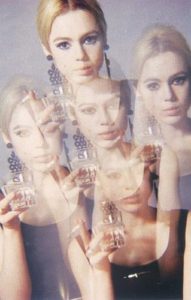
 When the Sun is conjunct, square or opposite Neptune, reality trails your life with atmosphere, implication, memory, fantasy, intuition, hope, projection, and half a dozen invisible ghosts nobody else seems to notice. Your sense of identity has very thin curtains. Light gets in easily. So does everything else. With the Sun tied tightly to Neptune you are akin to watercolor dropped into a glass of water. You know you are there, yet defining exactly where you end and another person begins takes effort. You absorb moods without asking permission. You pick up emotional undercurrents before anyone has admitted they exist. Your sensitivity gives you immense depth, but it also means everyone wanders through. There is often a painful wound around being seen clearly. Part of you longs for recognition with painful sincerity. Another part slips away the moment anyone tries to pin you down. You want to be understood, yet you also resist being reduced to an easy explanation. Even your own self-image shifts according to circumstance, relationship, aspiration, disappointment, longing. You look back on earlier versions of yourself and wonder who on earth are those people.
When you have such fluidity, your imagination opens you to possibilities the more concrete personalities overlook. You see symbolic meaning, artistic potential, hidden connections. You sense the timelessness buried inside ordinary life. Music, photography, film, writing, dance, fashion, spirituality, psychology, performance, storytelling, design, healing work, or any field involving imagination and human feeling offers a natural language for what is difficult to explain directly. You possess an instinct for the invisible. Where other people need facts lined up, you grasp the whole mood in one flash. Your intelligence frequently enters through image, metaphor, instinct, resonance.
There is an early psychological lesson around disappointment, loss, inconsistency, idealization, sacrifice, confusion, or a parent whose emotional presence felt difficult to grasp. The exact story differs from person to person, though the emotional imprint involves trying to find solidity in a figure who felt mysterious, unavailable, wounded, distant, idealized, overwhelmed, or hard to truly know.
When the Sun is in aspect to Neptune, you may adapt yourself naturally depending on the situation. It helps you connect deeply. People feel understood around you. The difficulty appears when accommodation turns into disappearance. You require solitude more than most people. You need silence long enough to hear your own voice underneath the accumulated static of everyone you love, fear, admire, rescue, miss, envy, forgive, or secretly hope will finally understand you. Your relationship with ambition also carries this Neptunian haze. Part of you longs to express a deeply personal vision. Another part feels uneasy around a sense of ego, self-promotion, certainty, and worldly success. You can dream enormously and then hesitate when concrete action threatens to expose the dream to ordinary reality. Fantasy is safe partly through remaining untouched.
The imagined novel cannot receive a bad review. The imagined career never encounters competition. The imagined romance never disappoints. The imagined future remains flawless through staying imaginary. Neptune loves infinite possibility. The Sun asks you to inhabit one life.
At times you drift when direct action feels too harsh. You retreat into imagination, entertainment, sleep, romance, spiritual ideas, nostalgia, endless reflection, idealized futures, or emotional preoccupation. These states offer relief from the bluntness of ordinary existence. Real life has rent, awkward conversations, limitations, consequences, dental appointments. Your inner world has better lighting. Yet your growth lies less in killing the dream than in giving it bones.
You are also far stronger than your sensitivity initially suggests. People mistake it for fragility, including you. Yet your adaptability allows you to endure enormous emotional complexity. You recover through meaning, imagination, compassion, humor, art, and spiritual perspective. At your finest, there is real magic in the way you meet life, though it is a very human magic. You see symbolism where others see coincidence. You remind hardened people of an important lesson: life contains mystery, beauty, imagination, mercy, and meanings that cannot always fit inside a neat logical box. Your challenge is staying present while seeing beyond the present. The world needs your vision, but your vision needs grounding. Your dreams need schedules. Your compassion needs standards. Your intuition needs reality checks. Your openness needs locks on a few doors. Your spiritual longing needs an ordinary human life sturdy enough to hold it.
Consequently, children born with this aspect may grow up with a wounded sense of their sense of worth, specialness and identity. Which is related to a loose connection with the father. There maybe a statement about life as, “I don’t know who I am,” or, “I have to give up what I want.” The Development of Personality: Seminars in Psychological Astrology (Seminars in Psychological Astrology ; V. 1)

You have an unusual relationship with reality. You are deeply moved by it, often painfully so, yet part of you is always searching for the hidden door out of it. For some, it may be through a dramatic disappearance or obvious self-destruction. Your escapes may be different than that. You disappear into imagination, music, love, ideals, fantasy, spirituality, nostalgia, other people’s problems, impossible futures, beautiful disappointments, private worlds, and elaborate emotional stories feeling more bearable than whatever is sitting plainly in front of you. Reality, unfortunately, insists on limits. It asks for decisions. It presents consequences without consulting your emotional readiness. It demands your dreams acquire deadlines and relationships eventually reveal themselves as they actually are rather than as the magnificent novels you could write about them. It is where life often feels abrasive to you.
You are sensitive to your surroundings, though sensitive hardly captures the scale of it. You absorb atmosphere. A harsh room exhausts you. Music alters your emotional state. Beauty moves you deeply. Suffering penetrates you. Even other people’s unspoken distress seems to travel across the room and take a seat inside your chest without buying a ticket. There is very little emotional insulation between you and the world. Your sensitivity allows you access to the subtle dimensions of human experience. Your mind naturally drifts toward images, symbols, moods, memories, dreams, impressions, intuitions, fragments of feeling. Such proximity to the unconscious is one of your greatest gifts.
You sense the whole picture before understanding its individual pieces. You might recognize emotional meaning in an image, melody, photograph, dream, expression, color, silence, or fleeting intuition long before logic catches up. Your imagination draws connections a more literal mind would miss entirely. Where another person sees unrelated fragments, you sense an invisible thread. So creativity is a good outlet for you. Without a channel for everything you absorb, your inner world gets crowded. Feelings accumulate without names. Impressions float around without form. Longings blur into fears. Other people’s emotions become tangled with your own. Art gives the chaos a container.
Music, writing, photography, acting, dance, film, design, painting, poetry, astrology, healing, spiritual practice, storytelling, performance, or any work involving imagination lets you take what has no shape and give it one. You possess an instinct for atmosphere. You understand color emotionally. You notice the psychological power of images. You respond strongly to texture, music, lighting, scent, movement, touch, faces, landscapes, voices, and visual harmony. Your senses are receivers. They are doors. It is lovely until you forget – doors need hinges.
One of the harder dimensions of your nature involves the instability of identity. You are so receptive to what surrounds you that your sense of who you are shifts according to where you are, whom you love, what inspires you, or what another person seems to need from you. You adapt with ease. Sometimes too much ease. Then someone asks what you want. And the question feels unfairly advanced. There is a sacrificial instinct inside you. You are drawn toward people, causes, dreams, professions, spiritual paths, relationships, or ideals allowing you to transcend the narrow boundaries of personal concern. Ordinary self-interest is unsatisfying. You want your life to mean more than survival, status, comfort, or applause. You want devotion. You want a reason to pour yourself into life.
When you find this reason, your loyalty runs deep. You are capable of giving years to a vision, person, vocation, spiritual path, artistic pursuit, humanitarian cause, or ideal. You willingly endure when your heart believes the sacrifice serves a larger purpose. You possess a quiet longing to contribute, heal, inspire, comfort, uplift, beautify, redeem, or somehow soften the brutality of being alive. This longing is gorgeous. It is also where you are easiest to exploit. Anyone offering transcendence has access to a vulnerable place in you. Charismatic teachers, wounded lovers, grand causes, spiritual groups, manipulative organizations, glamorous fantasies, romantic saviors, tragic geniuses, tortured souls and anyone claiming to possess access to a higher realm can catch your attention if they speak convincingly to your hunger for meaning. You feel deeply for vulnerable people, wounded people, excluded people, lonely people, frightened people, people who have lost everything, people whom nobody seems to understand. You imagine what it feels like from inside. You see human beings where society sometimes sees problems.
You need regular contact with your own preferences, anger, limits, desires, ambitions and physical instincts. You can withdraw into fantasy when responsibility feels brutal. You romanticize the future rather than confront the present. You may use relationships to avoid yourself. Or you become fascinated by spirituality while ignoring practical disorder. You sleep too much, drift, procrastinate, idealize, dissociate, binge on entertainment, live through another person, disappear into art, or wander endlessly through imagined possibilities. You seek relief from density. Ordinary life is unbearably heavy to a person built to notice invisible things. Schedules, money, administration, conflict, routine, logistics, boring responsibilities and hard limits have none of the poetry your inner world prefers.
There is a particular sadness in unrealized talent for you. You sense what you could make, express, give or become with almost painful sight. The vision is vivid. Yet translating vision into form requires repetition, discipline, patience, failure, revision and all those thoroughly unglamorous habits. Your imagination needs craft. It is how you stop drifting without strangling the dreamer inside you. You cannot live entirely in practical reality either. A purely material existence would starve you. You need mystery. You need beauty. You need experiences to remind you life has depth beyond productivity and survival. You need contact with art, imagination, symbolism, nature, music, spirituality, creativity, compassion or whatever gives you the quiet sense – human existence contains more than what appears on a bank statement. A greater vision keeps you alive internally. When you lose this vision, you lose direction. You bring invisible things into visible form. But first you have to remember the way home.
One of the deepest signatures of Sun–Neptune is a hunger for more in life. There is a longing underneath your ambitions. You reach for one goal, convinced the fog will lift when you get there, the desire will quiet, the inner restlessness will finally settle down and behave itself. Then you reach it, or come close, and discover the horizon has moved another five miles away. It is exhausting. You are searching for the experience of completion. You want to be somewhere inwardly and think, yes, this is it, this is the place I have been trying to reach all my life. But prefers longing than actually getting to it. Longing keeps the imagination alive. It keeps the soul reaching past what already exists. Yet longing also contains a cruel joke: the thing you chase shines brightest while it remains distant. Once it becomes real, it has edges. And Neptune has never been terribly fond of edges.
Your inner life prefers the infinite. It leaves you vulnerable to dissatisfaction even when your life contains much worth loving. You find yourself asking why you still feel restless when you have achieved what you once desperately wanted. You feel ashamed of this dissatisfaction, hoping gratitude would have cured it. Yet the problem is that you keep asking finite experiences to satisfy an infinite longing. No career, spiritual system, artistic identity, lover, teacher, intoxicant or grand purpose can permanently fill a space inside you that was never designed to stay filled. This space is part of your nature. Learning to live beside it changes everything. Before it happens, disillusionment stalks you. You idealize, then reality interrupts. The gap between vision and reality hurts you more than it hurts other people. So when the illusion breaks, part of your identity breaks with it.
You move between idealization and disillusionment with surprising intensity. One moment you are sure a person, path or vision holds the answer. Later you wonder how you ever believed in it. You see possibilities with tremendous vividness. Your vision is intoxicating. You are easily moved by anything offering transcendence. Beauty, music, or suffering. Glamour has enormous power over you. The glow surrounding what you want to believe. This glow appears around people, causes, relationships, lifestyles, artistic identities and spiritual ideas. It gives them an aura of significance. You feel they represent more than themselves.
You identify easily with victims, outsiders, sufferers and people whose lives have fractured around them. Their pain reaches you quickly. Cruelty disturbs you deeply. You struggle to understand how people remain indifferent to suffering. Yet there is a hidden danger inside it. You might build an identity around saving.
Water often holds particular symbolic power for you. The sea mirrors your inner world perfectly. Beautiful, vast, hypnotic, shifting, impossible to hold. You feel calmer near oceans, rivers, lakes, rain or baths. Water offers an environment without hard boundaries. You stare at it and feel some primitive part of yourself exhale. Decision-making exhausts you since every choice closes other possibilities. You sense so many directions, choosing one is a violent act. A decision gives shape to life, and shape means limitation. Part of you resists limitation. When emotional life grows too heavy, you instinctively search for a kinder territory. The territory is usually harmless: music, films, books, sleep, fantasy, nature, art, meditation, long showers, or long walks. Other forms of escape have greater risk. Alcohol, drugs, compulsive behavior, destructive relationships, excessive fantasy, emotional withdrawal or chronic avoidance offer temporary relief from an overloaded inner world. The more sensitive you are, the more seductive numbness feels.