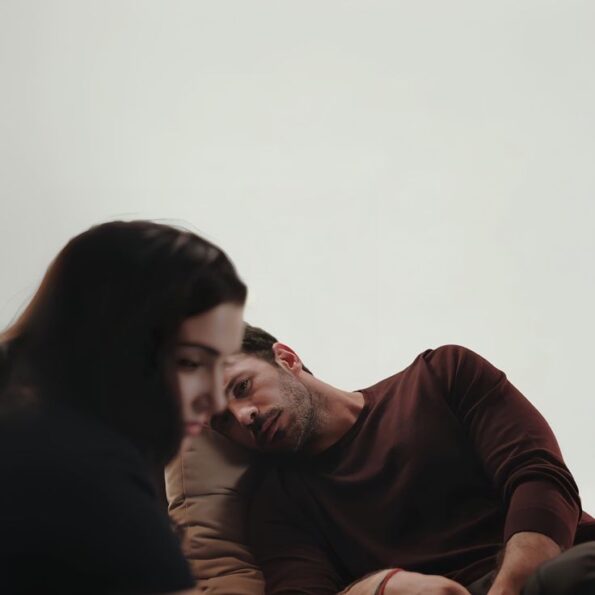
 The 8th house is this so-called dark place. It’s the underground river where all the feelings we were told not to have go when we’re small. Rage we weren’t allowed to express. Desire we were told was shameful. Grief we had to be “strong” about. It’s not evil down there – it’s unmet. We’re taught early on to be good, be nice, be acceptable. So we learn to exile parts of ourselves. And then we wonder why we feel fragmented, anxious, hollow. Of course we do – we’ve locked half our soul in the basement and told it never to knock. It can lead to a sense of paranoia – “What if they see this part of me and decide I’m broken?” But here’s the joke: everyone else is doing exactly the same thing. We’re all pretending not to be pretending. This house doesn’t ask us to act out our shadows; it asks us to sit with them. To say, “Hello jealousy. Hello resentment. Hello fear of abandonment. You’re not proof I’m unlovable, you’re proof I’m alive.” When we allow these parts into consciousness, they stop running the show from behind the curtain.
The fear around the 8th house is about exposure. Darkness is just the word we use when something hasn’t been witnessed yet. What people actually dread is the moment when the inner curtain is pulled back and we’re seen as the raw, contradictory, craving, grieving creature underneath. We’re terrified that if someone truly saw us – our envy, our hunger, our resentment, our fixation, our dependency – they wouldn’t say, “You’re human.” They’d say, “There’s something wrong with you.” And this fear doesn’t arise in a vacuum. It’s learned. Early on, we clock which emotions get us closeness and which get us distance. Joy, politeness, achievement – safe. Anger, neediness, obsession, despair – dangerous. So we don’t destroy those feelings, because we can’t; we bury them alive. The 8th house is where they keep breathing.
What makes this house so confronting is that it dismantles the myth of personal purity. It says: you aren’t just light seeking expression, you are also shadow seeking recognition. You don’t need indulgence, nor justification – it’s recognition. The psyche doesn’t want to be obeyed, it wants to be acknowledged. When it isn’t, it mutates. Unseen fear becomes paranoia. Unmet desire becomes compulsion. Suppressed grief becomes numbness. The 8th house often announces itself through crisis, loss, obsession, or collapse as a demand for honesty. There’s a particular humiliation involved here too. It confronts the ego with its lack of control. You can curate a persona, manage a reputation, even spiritually bypass your way into being seemingly enlightened, but you cannot negotiate with your shadow. It shows up when it wants to, often through other people, especially in intimacy. Lovers, enemies, betrayals, power struggles – these are mirrors, not accidents. They bring us face-to-face with parts of ourselves we’d rather outsource or deny.
Yet, this is where the great misunderstanding lies. We assume that acknowledging our darker material will make us monstrous, when in reality it makes us integrated. The danger isn’t in knowing you’re capable of jealousy or manipulation or dependency; the danger is insisting you’re not. The shadow doesn’t disappear through denial – it gains autonomy. What we refuse to own ends up owning us.
The moment you accept that you are not pure light, you become less dangerous to yourself and others. Conscious darkness is ethical. Unconscious darkness is chaos. The 8th house isn’t the place where something is wrong with you; it’s the place where you discover what’s real. Vulnerability always feels like standing naked in a thunderstorm holding a metal pole. But consider this: when we hide our darkness, we don’t become safer – we become split. And what’s split cannot relax. What’s hidden eventually leaks out sideways as self-sabotage, projection, or that odd feeling of loneliness even when surrounded by people.
Rot feeds life. Death makes room. Shadows give depth. A soul without shadow is not enlightened – it’s unfinished. What we call our “darker sides” are often just emotions that arrived without manners. Rage that showed up when politeness was expected. Desire that emerged where restraint was praised. Grief that lingered long after society had moved on. Somewhere along the way, we mistook intensity for pathology. We internalized the idea that to be acceptable we must be tidy, legible, and emotionally recyclable. The 8th house is where that lie collapses. It’s the realm of psychological death.
This is why encounters with this part of life often arrive through crisis – loss, betrayal, obsession, grief, trauma, profound love. Events that strip away the curated self and force us into naked contact with our emotional underworld. These experiences feel catastrophic because they are initiatory. They dismantle the illusion that we can remain intact while remaining hidden. The 8th house is not asking you to parade your wounds. It’s asking you to stop abandoning yourself to maintain approval. It’s asking whether you’d rather be liked as a mask or known as a soul.
The 8th house is where the psyche hides what it couldn’t survive feeling at the time it happened. Abuse taught the nervous system the world is unsafe. Abandonment is the hard-wired the expectation of loss. Grief so vast it collapsed time itself. In Randall’s ABC of Astrology, he says we don’t like to read the story of the 8th house. She’s naming something human: the instinct to look away from pain that once nearly swallowed us whole. Because this house doesn’t just describe what happened, it describes what happened and then got sealed. These aren’t memories we casually revisit. They live in the body as tension, as dread, as a quiet clutching sensation in the gut when you feel something is fundamentally wrong and there may be no exit. It’s the terror of inevitability. The belief that this suffering isn’t circumstantial, but fated. This is just how life is for you.
What’s so unsettling about the 8th house is that it doesn’t offer reassurance upfront. It doesn’t say, “Don’t worry, everything will be fine.” It says, “Something ended here – or never properly began – and you learned a story about yourself because of it.” Often that story is bleak: I am powerless. I am too much. I am not worth staying for. I will always lose what I love. These conclusions feel ancient, unquestionable, etched into stone. Fate-like. And when astrology uses the language of fate, it can feel cruelly validating of our worst fears. But here’s the quiet revolution hiding inside the terror: fate in this house is about inheritance. You didn’t choose these wounds, but you are living inside the psychic residue they built. The reason it feels like there’s no way out is because these experiences occurred before you had agency. Before choice. Before language. The psyche, when trapped, confuses survival strategies with destiny.
The 8tth house is where fate feels claustrophobic. Where the future seems pre-written in a handwriting you don’t recognize but can’t erase. This house threatens the comforting myth that everything happens for a reason we can immediately tolerate.
A floorboard creaks when you step in this house. But the 8th house never stands alone, it leans back into the 4th like a shadow returning to its source. So much of what erupts in the 8th house didn’t begin there at all. It began in the early rooms of the psyche, in the family atmosphere, in the childhood home. The 4th house is where we learned what love costs, what safety feels like, what silence means. It’s where we absorbed our first lessons about attachment, power, absence, and belonging, long before we had the words to understand them. Those lessons don’t stay politely in the past. They seep forward.
Sigmund Freud spoke of the compulsion to repeat patterns from the past. It isn’t because we’re foolish or masochistic, but because the psyche is loyal to what is familiar, even when it hurts. There’s a strange comfort in repetition. The nervous system recognizes the pattern and says, Yes, this again. I know how to survive this. And so we recreate, almost ceremonially, the essential conflicts of childhood devotionally. We choose partners who mirror our parents. We reenact abandonment, control, emotional unavailability, or chaos, hoping – this time – something will end differently. The 8th house is where this repetition becomes visible, unavoidable. Intimate relationships strip us of our defenses. You can perform competence in public life, spirituality, even friendship, but intimacy demands regression. It pulls us back into our earliest emotional postures. This is why love feels so dangerous. You’re doing more than relating to the person in front of you; you’re negotiating with ghosts.
The 8th house is also where repetition becomes choice. When the unconscious pattern enters awareness, it no longer has absolute power. You feel the old fear rise, the old urge to cling or withdraw or dominate or disappear, and suddenly there’s a moment – brief, terrifying, holy – where you can respond differently. This moment is healing. It proves you are no longer imprisoned by it.
In the merging of two people, there is a death that must occur. The old role – the child who adapted to survive – cannot remain intact. Something has to be shed. The persona that once kept you safe becomes too small for the intimacy now demanded. This is why the second stage of relationship often feels disorienting, even threatening. The romance gives way to reality, and reality insists on transformation. Something more authentic must emerge. In relationship, this can feel like loss of control, loss of certainty, loss of identity. We panic and say, Something is wrong. But from the 8th house perspective, something is finally working.
When two people truly merge psychologically – old survival strategies surface so they can be relinquished. The past doesn’t repeat itself to punish us; it repeats itself to be completed. The wound doesn’t reopen to torment us; it reopens because now, finally, there might be someone present who can stay. So if love feels like it’s pulling you backwards before it moves you forward, it’s lineage unraveling itself. The 4th house hands the 8th its unfinished business, and intimacy becomes the meeting place where history either tightens its grip… or loosens it. Relationships aren’t neutral ground; they are laboratories. In closeness, the nervous system stops pretending. Old patterns surface not as memories, but as reactions – jealousy that feels disproportionate, fear of abandonment that arrives without invitation, a strange attraction to dynamics that echo early emotional climates. We don’t fall in love randomly; we fall in love recognizably.
The 7th house is where we meet the other. It’s courtship, agreement, projection, the civilized dance of “you” and “me.” We negotiate, we compromise, we present our best angles. But when we cross the threshold into the 8th, something far less polite occurs. Relationship becomes something that happens to us. It doesn’t introduce a new person so much as it introduces a new depth. After the meeting comes the merging, and with merging comes loss of distance. The protective gap closes. Suddenly, the other is close enough to see what we’ve been editing out in ourselves. Traits we thought belonged to our partner alone begin to glint back at us from the mirror: control, fear, jealousy, dependency, rage, shame. The unsettling realization dawns – what we are reacting to so violently may not be foreign at all. It may be intimate. Familiar. Ours.
The 8th house exposes the underside of love, the part rarely spoken aloud because it threatens the romantic myth. Courtship promises harmony; intimacy reveals power. And where there is power, there is vulnerability. Where there is vulnerability, there is the potential for harm. The “dark side” of relationship isn’t a separate category inhabited only by unfortunate others. It is a spectrum that exists wherever human beings bind themselves together under conditions of fear, unmet needs, and inherited wounds. Violence behind closed doors, sexual exploitation, emotional coercion, suffocating family entanglements – these aren’t aberrations of love, they are distortions of it. They arise when unconscious material meets intimacy without awareness.
What makes the 8th house so unbearable is that it refuses to let us externalize all the blame. It doesn’t say, “You chose the wrong person.” Sometimes it whispers something far more confronting: this pattern recognizes you. This unresolved material from the past is seeking expression. The psyche gravitates toward what it knows, even when what it knows is pain. Especially when it’s pain that once came wrapped in love. This is where relationships stop being romantic adventures and start becoming psychological initiations. The partner becomes a catalyst. They draw out material that polite society – and even our own conscious minds – would rather leave dormant.
But here’s the distinction, spoken softly because it matters: recognizing the shadow in relationship isn’t the same as excusing harm. The 8th house is about awareness, not tolerance of abuse. Seeing the deeper dynamics at play does not mean enduring violence, exploitation, or degradation. In fact, awareness is what makes boundaries possible. Consciousness is what breaks spells. When we can say, “This terrifies me because it mirrors something old,” or “This dynamic is familiar, not because it’s right, but because it’s unfinished,” the relationship shifts. Sometimes it deepens into something more honest. Sometimes it ends, because the lesson was never about staying – it was about seeing.
We encounter someone and say, often unconsciously, You will complete me, You will heal me, You will finally make life make sense. But then – quietly, inevitably – we cross the threshold into the 8th house. And here something startling occurs. The beloved stops being a screen for our hopes and starts becoming a reflector of our truth. What looks back at us is no longer just them, but us – our fears, our wounds, our unmet needs, our unexamined power dynamics. This is where the fairy tale quietly burns its own pages. Many of us were raised on a dangerously incomplete education about love. We were taught that if something hurts, something is wrong. Real love is safe, soothing, validating, endlessly affirming. Pain, conflict, loss – those were presented as evidence of failure rather than inevitabilities of intimacy.
So we grew up clutching an ideal image of relationship the way a child clutches a blanket, believing that if we hold it tightly enough, the cold truth won’t get in. But love doesn’t arrive disinfected. It comes entangled with fear, grief, disappointment, and the ever-present possibility of loss. Attachment awakens vulnerability. To love is to risk. To merge is to expose. And if no one ever taught us that pain can coexist with love – without cancelling it – we’re left defenseless when reality intrudes.
This is why some people stay in relationships that are quietly, or not so quietly, destructive. Not because they don’t see the damage, but because the terror beneath it feels worse. Abandonment. Separation. Loneliness. These aren’t mild discomforts to the psyche; they’re existential threats, especially if early attachment taught us that being alone meant being unsafe. The mind will tolerate astonishing levels of suffering if the alternative feels like annihilation. And then there’s a deeper, more unsettling layer – the way transformation doesn’t always knock politely. This house doesn’t operate through rational decision-making. It operates through pressure. Through conflict. Through provocation. Something inside senses that an old pattern has outlived its usefulness, but because it isn’t conscious, it can’t say, I need change. Instead, it creates conditions where change becomes unavoidable.
So a person may unconsciously provoke their partner. Push boundaries. Trigger arguments. Reignite old conflicts. It can look like sabotage, but at its core it’s a desperate bid for evolution. The psyche is saying, This way of loving is no longer survivable. But because the conscious mind is still clinging to the ideal – still terrified of loss – the message comes out sideways, as confrontation, chaos, or crisis. This is one of the cruel paradoxes of intimacy: we may fear abandonment so intensely that we recreate the very conditions that bring it closer. It’s because something inside us is done repeating the same story. The tragedy is that when we don’t understand this process, we personalize it. We think we are broken, dramatic, difficult, unlovable. But what if what’s actually happening is that the soul is demanding honesty where fantasy once stood?
The ideal image of relationship is comforting, but it is brittle. It can’t survive real life. Real love asks for something braver: the willingness to grieve illusions. To accept that pain does not always mean danger, and that loss does not always mean failure. Sometimes it means growth. Sometimes it means the end of a chapter that was only meant to teach us what no longer works. What looks like provocation is often the psyche’s desperate attempt to force transformation. To drag buried material into the open. To break a pattern that will not dissolve through insight alone. The soul, when ignored, becomes dramatic. It would rather risk explosion than endure endless quiet decay. This is why these confrontations feel so charged, so disproportionate, so final. They are rarely about the argument itself. They are about histories being reactivated — old losses, unmet needs, unspoken griefs. They are about the moment when the cost of staying the same becomes greater than the fear of change.
The 8th house demands emotional nakedness, and it doesn’t ask nicely. What it challenges us to do – what it insists upon – is honesty of the most unsettling kind. Where we admit what we feel even when it disrupts the story we tell about ourselves. Psychologists, researchers, therapists – across disciplines – have circled the same truth from different angles: the emotional environment we grow up in doesn’t merely influence us, it organizes us. It shapes how safe we feel in closeness, how we handle loss, how we respond to power, intimacy, and fear. Childhood doesn’t just sit in the past; it operates quietly in the present, steering choices we swear we’re making freely.
The 8th house is where the steering wheel becomes visible. It exposes how destiny isn’t some external curse written in the stars, but an internal momentum formed early on. When feelings were unsafe, we learned to suppress. When love was unpredictable, we learned to cling or control. When closeness hurt, we learned to dissociate. These strategies once kept us alive. Later, they quietly script our adult lives. Fate, in this sense, isn’t mystical – it’s psychological repetition wearing a dramatic costume. The 8th house insists on emotional reality. Because pretending we are unaffected by our past doesn’t make us free – it makes us compulsive. What is unacknowledged does not rest. It seeks expression, often through the body, through relationships, through sex.
And sex, of course, belongs squarely here as power. Sex is one of the most potent bonding forces humans possess. It can soften defenses, dissolve separateness, and create a sense of union. In its light expression, it reassures the nervous system: I am wanted, I am chosen, I am not alone. It can deepen commitment, trust, and emotional safety when it’s held within presence and care. But the 8th house never lets us forget the shadow. When sex is disconnected from emotional feelings, when it’s used to avoid intimacy rather than deepen it, it becomes destabilizing. It binds people who are not aligned, opens psychic and emotional doors that no one intends to walk through, entangles fear with desire. Historically, symbolically, and psychologically, sex has always been linked to life and death. It can regenerate or it can deplete. It can heal attachment wounds or reopen them. The danger isn’t sex itself; the danger is unconsciousness.
The 8th house challenges us to stop pretending that we are untouched by our history, unaffected by intimacy, immune to consequence.
What makes this territory so uncomfortable is that it collapses the fantasy of separation between psyche and body, between past and present. Childhood patterns don’t stay politely in memory; they walk straight into our bedrooms, our arguments, our silences, our compulsions. Sex, like all 8th-house matters, reveals whether we are acting from choice or from unfinished history. Of course we don’t want to wheel our traumas into everyday life like mismatched luggage. No one thinks, Brunch would be improved if I brought my abandonment wound and unresolved grief. We learn very early that certain feelings don’t belong in public. So we compartmentalize. We tuck the heaviness away. We become functional, charming, competent. We learn how to “be normal.” And on the surface, it works. For a while. But the 8th house doesn’t believe in permanent storage. Repression is postponement. What we exile from consciousness doesn’t dissolve; it incubates. It gains density, urgency, voltage. The psyche is a living system, and what isn’t expressed seeks another route.
When the unconscious erupts, it storms in wearing the masks of panic, obsession, rage, despair, jealousy, sexual compulsion, sudden distrust. These forces feel foreign when they surface, which is why they terrify us. We say, This isn’t me. But it is you – just not the version you’ve been allowed to know. The tragedy is that these eruptions often strike where we are most vulnerable: in intimacy. Relationships become the battleground because closeness lowers defenses. The nervous system relaxes just enough for the buried material to sense opportunity. Suddenly we’re overreacting, sabotaging, accusing, withdrawing, clinging. And we’re watching ourselves do it, half-horrified, half-possessed, wondering why love feels like danger.
This is the paradox of repression: the more we try to keep things under control, the more explosive they become. The unconscious is communicative. It doesn’t terrorize us for pleasure. It terrorizes us because subtle signals were ignored. Because feelings that needed witnessing were silenced. Because pain that required care was told to behave. The 8th house doesn’t want you to bleed all over innocent bystanders. It doesn’t demand confession or emotional exhibitionism. What it asks for is relationship with your own depths. A private, courageous willingness to feel what you feel without rushing to fix it or judge it. When darkness is met consciously, it loses its appetite for destruction. Unintegrated pain seeks drama. Integrated pain seeks understanding.
When we give ourselves permission to acknowledge our grief, our fear, our shame, our rage – in contained, honest ways – the psyche no longer needs to hijack our relationships to be heard. The explosions soften into signals. The chaos becomes information. What once felt like fate begins to feel like choice. So the work of the 8th house is not about dragging your wounds into the light of day for everyone to see. It’s about refusing to abandon yourself internally. Because the moment you stop running from your depths, they stop chasing you.
This is why these forces feel so terrifying when they finally surface. They don’t arrive as polite insights. They arrive as eruptions. Sudden rages that don’t match the situation. Panic that hijacks the body. Destructive arguments that seem to come from nowhere. Compulsions that sabotage the very relationships we claim to cherish. When the unconscious pours forth, it feels like possession – as if something ancient and ungovernable has taken the wheel. Relationships are the primary casualty because intimacy lowers our defenses. The closer we get to someone, the less energy we have to maintain the internal barricades. The psyche senses proximity and thinks, Now. Now it’s safe enough – or dangerous enough – to come out. And suddenly the partner becomes the stage upon which decades of unacknowledged pain perform their bloody opera. What’s heartbreaking is that we often blame the relationship for what is essentially a backlog of unprocessed truth. We say, “This person brings out the worst in me,” without recognizing that they may simply be standing close enough for the worst to finally surface.
The transformation promised by the 8th house isn’t cosmetic. It doesn’t rearrange the furniture; it burns the house down and asks what, if anything, is worth rebuilding. And when it works, when it is met with courage rather than denial, the result can feel transforming. A relationship that seemed emotionally lifeless, brittle with resentment or distance, can begin to come to life again. Shadow is not the enemy of light. It is its counterpart. Light without shadow is naïveté. Shadow without light is chaos. Together, they create depth. When we illuminate the feelings we harbor -jealousy, grief, rage, longing – we aren’t indulging them. We are integrating them. And integration is what allows love to grow up. In relationships, this illumination can feel terrifying at first. Speaking the unspeakable. Admitting truths that might disrupt the status quo. Acknowledging desires or resentments we were certain would destroy everything if voiced. Yet so often, it is the silence killing the bond. When both people are willing to enter this underworld consciously, intimacy deepens. Trust becomes real rather than assumed. The relationship gains substance, gravity, soul.